In a stunning reversal of roles that underscores a seismic shift in the global technology landscape, the European Union is now considering a policy it once vehemently condemned: forced technology transfers. For decades, the EU, alongside the US, accused China of compelling foreign companies to hand over their intellectual property in exchange for market access. Now, facing a stark innovation deficit and a struggling automotive sector, the EU is looking to adopt the very same strategy to save its own industries from being overwhelmed by Chinese competition [1].
The EU's Desperate Gambit
In October 2025, reports emerged that the EU is contemplating new rules that would force Chinese companies, particularly in the electric vehicle (EV) and battery sectors, to transfer technology to European firms as a condition for operating within the bloc [1]. The proposed measures would also require Chinese companies to use a certain amount of EU-sourced goods and labor, and to establish joint ventures with European partners. EU Trade Commissioner Maros Sefcovic justified the potential move by stating that the EU welcomes foreign investment, but only if it brings “real investment” in the form of jobs, value-added production, and, crucially, “technology transfers to Europe, as European companies have been doing when they’ve been investing in China” [1].
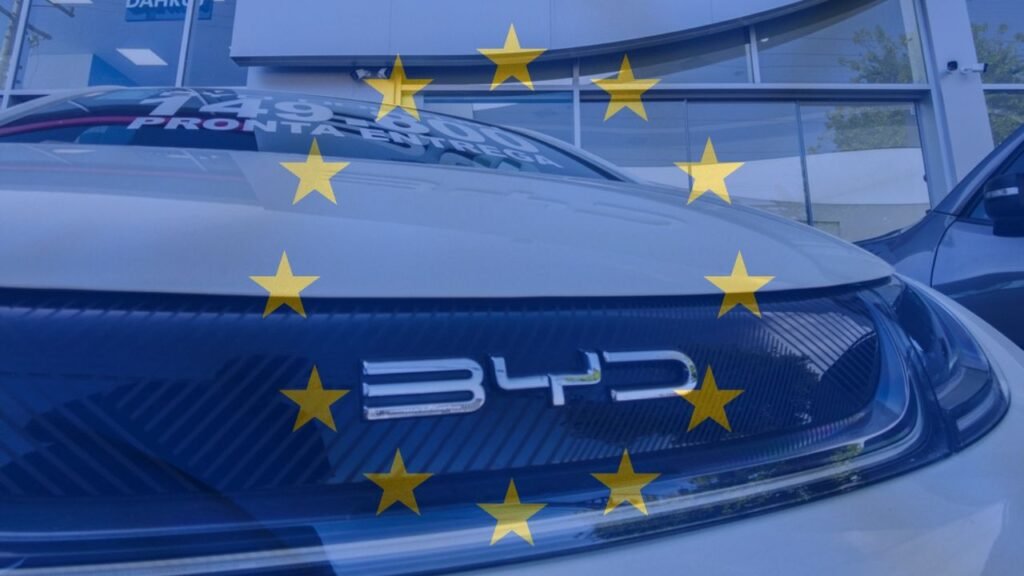
This move is a clear admission of the EU’s precarious position. The European automotive industry, once a global powerhouse, is now facing an existential crisis. It is grappling with a toxic cocktail of high energy prices, sluggish sales, and a slow transition to electric vehicles, all while Chinese EV manufacturers like BYD are making significant inroads into the European market [2]. The numbers paint a grim picture: Chinese-made cars now account for 6% of EU sales, and this figure is projected to grow rapidly [3].
China's Dominance: A Tale of Two Decades
China’s rise from a technological follower to a leader has been nothing short of meteoric. While the EU was busy lodging complaints at the World Trade Organization (WTO) about China’s technology transfer policies [4], China was methodically executing a long-term strategy to become a high-tech powerhouse. The “Made in China 2025” initiative, launched a decade ago, has been wildly successful, particularly in the EV and battery sectors.
Today, China’s dominance in these areas is undeniable. Chinese firms produce nearly two-thirds of the world’s EVs and control a staggering 94% of the production of LFP (lithium iron phosphate) batteries, a key component in modern electric vehicles [5]. In the first eight months of 2025, Chinese battery manufacturers CATL and BYD alone commanded a combined global market share of 54.8%, while the top three South Korean manufacturers held a mere 16.8% [6]. European manufacturers are conspicuously absent from the top ranks.
This technological ascendancy is also reflected in broader innovation metrics. In 2025, China broke into the top 10 of the World Intellectual Property Organization’s (WIPO) Global Innovation Index for the first time, a spot once held by Germany [7]. This achievement is a testament to China’s massive investments in research and development, its focus on high-tech exports, and its burgeoning innovation ecosystem.
The Irony is Rich
China’s response to the EU’s proposed policy has been swift and tinged with irony. A spokesperson for the Chinese Foreign Ministry stated that China “firmly opposes forced technology transfers that violate World Trade Organization rules” and decried “protectionist and discriminatory practices carried out under the pretext of enhancing competitiveness” [8]. The statement is a near-perfect echo of the complaints once leveled by the EU against China.
The tables have well and truly turned. The EU, once a vocal critic of China’s industrial policies, is now contemplating a taste of its own medicine. This dramatic role reversal is a stark reminder that in the 21st-century global economy, technological leadership is not a birthright. It is earned through strategic investment, relentless innovation, and a long-term vision. The EU’s current predicament serves as a cautionary tale for any nation or bloc that rests on its laurels while a determined competitor is busy building the future.
References
[1] GreenergyDaily. (2025, October 15). EU Considers Forced Tech Transfers for Chinese Investments. Retrieved from https://www.greenergydaily.com/index.php?id=3943 [2] Forbes. (2025, January 5). Europe’s Automakers Face Pummeling In 2025 But Positives Remain. Retrieved from https://www.forbes.com/sites/neilwinton/2025/01/05/europes-automakers-face-pummeling-in-2025-but-positives-remain/ [3] ACEA. (2025, September 24). Economic and Market Report: Global and EU auto industry. Retrieved from https://www.acea.auto/publication/economic-and-market-report-global-and-eu-auto-industry-first-half-of-2025/ [4] WTO. (2018, June 1). DS549: China — Certain Measures on the Transfer of Technology. Retrieved from https://www.wto.org/english/tratop_e/dispu_e/cases_e/ds549_e.htm [5] BatteryTechOnline. (2025, July 23). Report: China’s Battery Control Risks US Future. Retrieved from https://www.batterytechonline.com/industry-outlook/chinas-battery-dominance-threatens-us-security-economy-fdd-report-warns [6] electrive.com. (2025, October 15). China’s battery manufacturers are becoming more dominant in the global electric car market. Retrieved from https://www.electrive.com/2025/10/15/chinas-battery-manufacturers-are-becoming-more-dominant-in-the-global-electric-car-market/ [7] WIPO. (2025, September 16). WIPO Global Innovation Index 2025. Retrieved from https://www.wipo.int/en/web/global-innovation-index/w/news/2025/wipo-global-innovation-index-2025-switzerland-sweden-us-the-republic-of-korea-and-singapore-top-ranking-china-enters-top-10-innovation-investment-growth-slows [8] China Daily. (2025, October 15). China says it opposes forced tech transfers. Retrieved from https://www.chinadaily.com.cn/a/202510/15/WS68ef8c89a310f735438b52fd.html