The global automotive landscape is undergoing a seismic shift. While Western nations erect trade barriers and grapple with the strategic implications of a rising competitor, China’s auto industry is not just growing – it’s accelerating at a pace that suggests an inevitable market dominance. Despite concerted efforts to contain its expansion, a combination of rapid innovation, competitive pricing, and sheer manufacturing might is propelling Chinese automakers to the forefront of the global market, particularly in the electric vehicle (EV) sector.
A recent surge in Chinese vehicle exports and market share in Europe has sent shockwaves through the established automotive order. This is not a mere cyclical trend, but a fundamental restructuring of the industry, driven by a new generation of Chinese companies that are outmaneuvering their Western counterparts in both speed and strategy.
The Unstoppable Rise of China's Auto Industry
The numbers speak for themselves. In the past year, Chinese passenger vehicle exports surged by an astounding 23%, reaching 6.4 million units and surpassing Japan as the world’s largest car exporter [1]
This meteoric rise is particularly evident in the European market, where Chinese brands have been making significant inroads.
|
Region/Metric |
Data |
Source |
|
Chinese Passenger Vehicle Exports (YoY) |
+23% (6.4 million units) |
1 |
|
EU Market Share (May 2025) |
5.9% (doubled) |
2 |
|
Western Europe Sales (Jan-Sep) |
500,000 units (30% in UK) |
3 |
|
EU Sales (Made in China) |
6% of total |
4 |
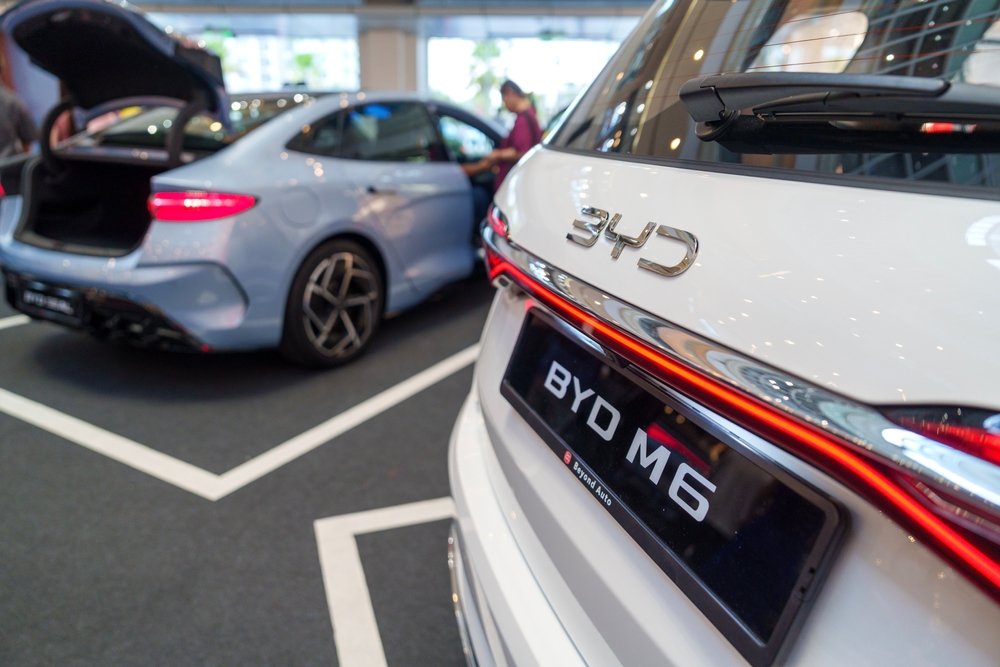
Leading the charge are companies like BYD, which is on track to overtake Tesla as the world’s largest EV manufacturer, and Chery, which became the top-selling Chinese brand in the UK in October [3]
Even legacy brands are feeling the heat, with the UK’s iconic Vauxhall being outsold by the Chinese-owned MG [3]
Western Headwinds: A Futile Attempt to Stem the Tide?
In response to this competitive onslaught, Western governments have implemented protectionist measures. The United States has imposed 100% tariffs on Chinese EVs, while the European Union has enacted tariffs ranging from 17% to 38% [3]
However, these barriers may prove to be a case of too little, too late.
The UK’s open-market approach provides a compelling case study. By refraining from imposing new tariffs, the UK has become a key battleground where Chinese automakers are thriving, demonstrating that market forces and consumer demand can override protectionist policies. The British public’s enthusiastic adoption of Chinese vehicles underscores a crucial point: consumers are increasingly prioritizing value, technology, and innovation over brand origin.
China's Winning Formula: The Secrets to Its Success
China’s automotive success is not accidental; it is the result of a deliberate and well-executed strategy. Chinese companies have mastered the art of rapid product development, with some capable of bringing an all-new vehicle to market in as little as 18 months – less than half the time it takes their Western competitors [5]
This agility is complemented by a focus on delivering advanced technology and premium features at a lower price point. From sophisticated driver-assistance systems to in-car entertainment, Chinese vehicles are offering a compelling value proposition that is resonating with consumers worldwide. As one industry analyst puts it, “At the end of the day, it’s value. These cars are good. If I build better products that provide more value to my customer, I win” [3]
The Road Ahead: A New World Order in the Automotive Industry
The rise of China’s auto industry is not just about market share; it’s about a fundamental reshaping of the global automotive landscape. As European automakers struggle with overcapacity and the transition to EVs, Chinese companies are poised to capitalize on the situation. We are already seeing instances of Chinese manufacturers acquiring struggling European factories, such as Chery’s takeover of a former Nissan plant in Barcelona [3]
This trend is likely to continue, leading to a new world order in which Chinese companies play a central role in vehicle design, manufacturing, and technology. The attempts by Western nations to hold back this tide may slow its advance, but they are unlikely to reverse it. The era of Chinese automotive dominance has begun.
References
[1] Financial Times. “Chinese automakers are overtaking European rivals, says…”
[2] JATO. “Chinese automakers double European market share in May.”
[3] The Guardian. “Driving competition: China’s carmakers in race to dominate Europe’s roads.”
[4] ACEA. “Economic and Market Report: Global and EU auto industry.”