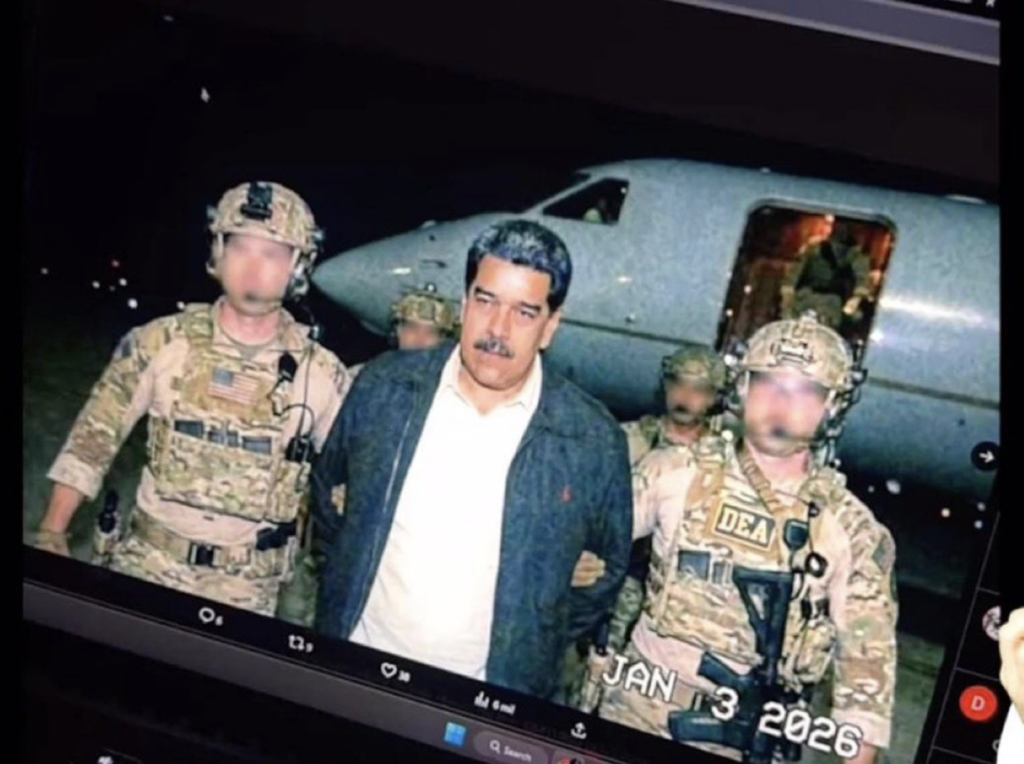
Caracas, Venezuela – January 3, 2026 – The United States’ capture of Venezuelan President Nicolás Maduro and his wife, Cilia Flores, following a major military strike in Caracas, has been widely condemned as an act of “state terrorism” and a flagrant violation of international law [1][3]. The operation, announced by US President Donald Trump, has been met with international outcry and has plunged Venezuela into a severe crisis, raising fears of broader regional instability.
A "Criminal" Act of Aggression
Venezuela has declared a national emergency, with Vice President Delcy Rodríguez denouncing the “military aggression” by the United States [1]. The Venezuelan government stated it was unaware of the whereabouts of its president and first lady and demanded proof that they are still alive [2].
This sentiment was echoed by international powers. Cuba denounced the operation as “state terrorism” and a “criminal” attack on the Venezuelan people, demanding a reaction from the international community [3]. The Russian Foreign Ministry called the US action an “unacceptable violation of the sovereignty of an independent state” and a “direct threat” to international peace and security [2].
“Expressions of unbridled power don’t come blunter than abducting a sitting president from his capital in the dead of night,” noted CNN’s Chief International Security Correspondent, highlighting the unprecedented nature of the US action [2]
Violation of International Law
Legal and diplomatic experts have pointed to the operation as a serious breach of the United Nations Charter and the foundational principles of international law, which protect national sovereignty and prohibit such unilateral military interventions. The European Union’s foreign policy chief, Kaja Kallas, while noting the EU has not recognized Maduro’s legitimacy, stressed that “under all circumstances, the principles of international law and the UN Charter must be respected” [3].
This event marks the first time the US has arrested a sitting head of state since its 1989 invasion of Panama to remove Manuel Noriega, and it represents the most significant US military action in the Americas since the Cold War [1]. Critics argue that the US indictment of Maduro on criminal charges does not provide a legal basis for a military invasion and abduction of a sovereign leader.
A History of Intervention
The strike on Venezuela is being viewed by many as the latest chapter in a long history of US military intervention in Latin America. From the CIA-backed coup in Guatemala in 1954 to the invasion of Panama in 1989, the United States has repeatedly interfered in the political affairs of its southern neighbors, often toppling elected governments and installing regimes aligned with its interests [3].
While the US administration frames the operation as a law enforcement action against an indicted “narco-trafficker,” critics argue it is a politically motivated act of aggression that destabilizes the region and undermines the global legal order. As the world waits for more details, the incident serves as a stark reminder of the volatile dynamics between the United States and Latin America.
References
[1] “Venezuela latest: Trump says US has ‘captured’ President Maduro in strikes on country – latest – BBC News.” BBC News, 3 Jan. 2026, www.bbc.com/news/live/c5yqygxe41pt.
[2] “Live updates: Multiple explosions rock Venezuelan capital Caracas | CNN.” CNN, 3 Jan. 2026, www.cnn.com/world/live-news/venezuela-explosions-caracas-intl-hnk-01-03-26.
[3] “Live: Trump claims Venezuela’s Maduro ‘captured’ after US attacks | News | Al Jazeera.” Al Jazeera, 3 Jan. 2026, www.aljazeera.com/news/liveblog/2026/1/3/live-loud-noises-heard-in-venezuelas-capital-amid-us-tensions.
”’