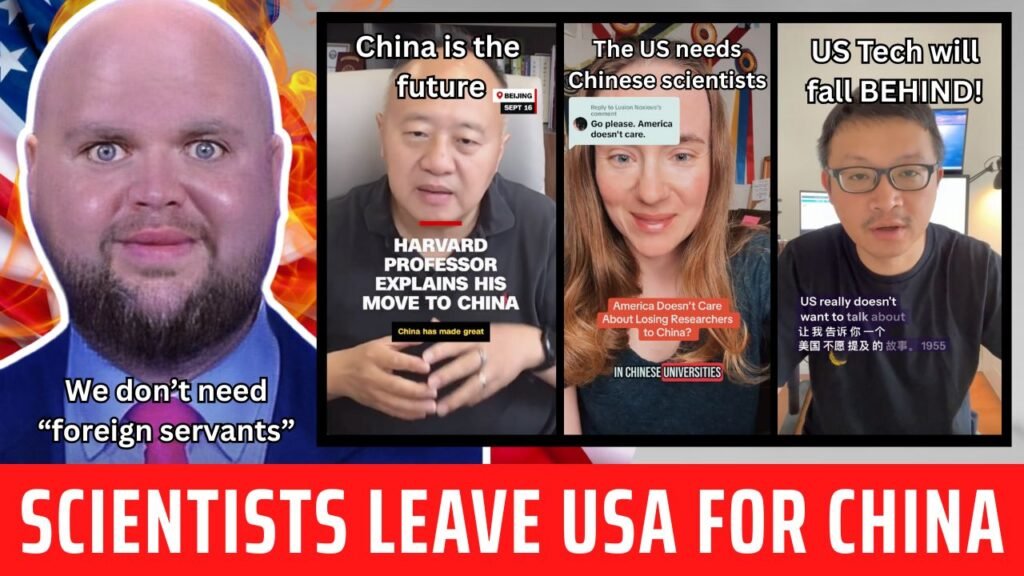
In a recent analysis, journalist Fareed Zakaria presented a stark assessment of the global technology landscape: China is not just catching up to the United States; it is surging ahead in critical areas, and no amount of political rhetoric from Washington is likely to change that trajectory. This conclusion is not based on fleeting headlines but on a deep, structural shift in innovation, strategy, and global influence. While American political discourse remains mired in internal squabbles and protectionist impulses, China is executing a long-term vision that is reshaping the world’s technological foundations.
This post will delve into the evidence supporting Zakaria’s claims, exploring why China’s technological momentum is a force that American leaders, regardless of their political party, may be powerless to stop. We will examine China’s dominance in green technology, its divergent and arguably more pragmatic approach to artificial intelligence, and its integrated strategy that weaves together hardware, software, and infrastructure into a formidable ecosystem.
The Green Revolution is Already Chinese
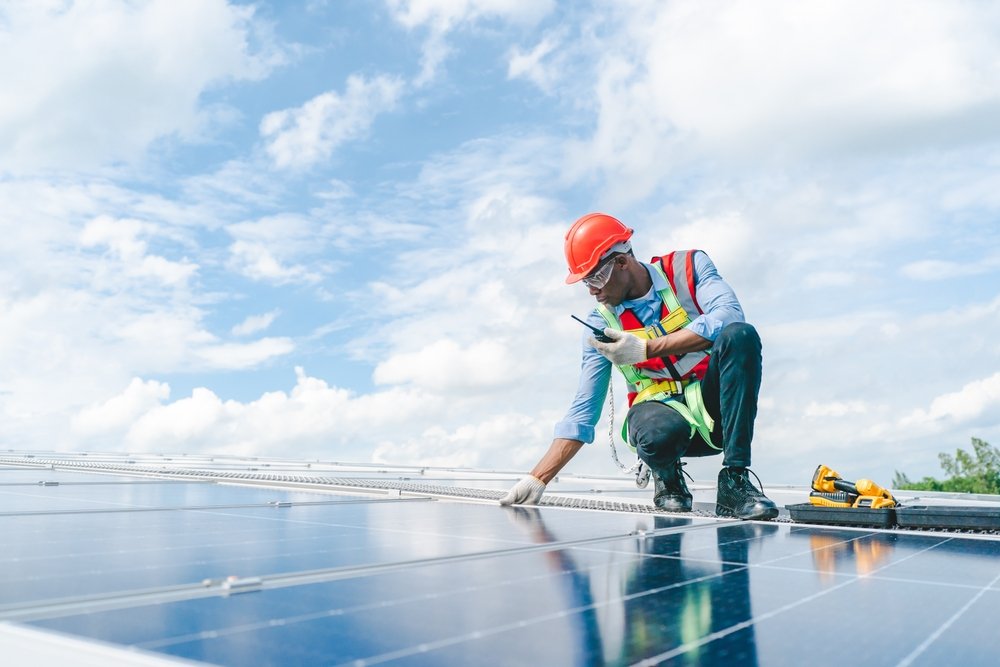
While the West debates the nuances of climate policy, China has quietly cornered the market on the technologies that will power the future. In green technology, from solar panels to batteries to electric vehicles, Beijing’s dominance is now overwhelming. According to a 2025 Solar Power Europe report, China accounted for a staggering 55% of the global solar market in 2024, installing more capacity than the next ten markets combined [1]. The International Energy Agency (IEA) further reports that China controls approximately 80% of the global solar panel supply chain [2].
This dominance extends to the electric vehicle (EV) sector. Over 70% of all EV batteries ever manufactured were produced in China, giving it an unparalleled advantage in manufacturing know-how [3]. The country’s EV battery market is projected to more than double from $93.97 billion in 2025 to $221.89 billion by 2030 [4]. This manufacturing prowess is not just for domestic consumption; China is leveraging its green tech as a powerful geopolitical tool, offering zero-tariff trade and infrastructure projects to nations across Africa, Asia, and Latin America.
Technology Sector | China’s Global Position | Key Statistics |
Solar Panels | Dominant Leader | 55% global market share; 80% supply chain control |
EV Batteries | Dominant Leader | >70% of all batteries manufactured; market to reach $221.89B by 2030 |
Industrial Robots | Leading Installer | Installed 9x more robots than the US in the last recorded year |
A Tale of Two AIs: Pragmatism Over Purity
The race for artificial intelligence is often portrayed in the West as a sprint towards Artificial General Intelligence (AGI), a hypothetical future AI with human-like cognitive abilities. American giants like OpenAI, Google, and Anthropic are locked in this high-stakes, high-cost pursuit. China, however, is playing a different game.
Beijing has prioritized the practical application and widespread diffusion of AI across its economy and society. As Zakaria noted, China seeks to embed AI into every corner of its system: logistics, surveillance, smart cities, healthcare, drones, and robots. This strategy ensures that AI delivers immediate economic returns and societal transformation. Furthermore, in a surprising twist, it is communist China that is embracing open-source AI models. Companies like DeepSeek are releasing powerful systems that can be easily adapted and deployed globally, challenging the proprietary, walled-garden approach of many American firms [5]. This could make Chinese AI the global standard, especially in developing nations hungry for cheap, customizable technology.
The Integrated Tech Ecosystem
Perhaps China’s most formidable advantage is its ability to integrate technology across domains. It is not just building AI models; it is weaving them into hardware, infrastructure, and urban planning. The country is already the world’s leader in industrial robotics, installing nearly nine times as many robots as the United States in the past year. It is pioneering a “low-altitude economy,” creating urban airspace for autonomous drones and flying cars, with services like package delivery already operational in cities like Shenzhen.
A report from the Australian Strategic Policy Institute (ASPI) underscores this lead, finding that China leads in 37 out of 44 critical technology fields, including defense, space, robotics, and AI [6]. A separate analysis by Bloomberg found that of 13 critical technologies, China leads in five and is rapidly closing the gap in seven others [7]. This is the result of a deliberate, long-term industrial policy that aligns government funding, research institutions, and private enterprise towards common national goals—a stark contrast to the fragmented and often adversarial relationship between government and the tech sector in the United States.
Rising Despite the Headwinds: China's Resilience Under Sanctions
Perhaps the most remarkable aspect of China’s technological ascent is that it is occurring despite sustained efforts by the United States and its allies to constrain it. Since October 2022, the Biden administration has imposed increasingly stringent export controls on semiconductor equipment and technology flowing to China. These measures have included restrictions on advanced chip manufacturing equipment, blacklisting of Chinese entities, and pressure on allies like the Netherlands and Japan to limit their own technology exports to China [8].
The semiconductor sector, often called the “oil of the 21st century,” has been the primary battleground. The US has revoked special export licenses for Taiwan Semiconductor Manufacturing Company (TSMC) to supply its Chinese facilities and has imposed sweeping restrictions on AI chip exports [9]. In January 2025, the administration announced new controls on advanced computing chips and cloud access, further tightening the technological noose around Chinese companies.
Yet China’s response has been nothing short of remarkable. Despite being cut off from the most advanced extreme ultraviolet (EUV) lithography machines essential for cutting-edge chip production, China’s leading foundry, Semiconductor Manufacturing International Corporation (SMIC), achieved 7nm chip production by mid-2022 [10]. The company accomplished this feat using older deep ultraviolet (DUV) technology with multiple patterning techniques—a more expensive and less efficient approach, but one that demonstrates remarkable engineering ingenuity under constraint.
The financial results speak volumes about China’s resilience. SMIC reported record revenue of $2.17 billion in the third quarter of 2024, representing a 34% year-on-year increase despite ongoing sanctions [11]. Meanwhile, China’s semiconductor equipment self-sufficiency rate reached 13.6% in 2024, with projections suggesting it could hit 50% by 2025 [12]. These figures represent not just statistical progress but a fundamental shift toward technological independence.
Huawei, perhaps the most sanctioned Chinese technology company, exemplifies this resilience. Despite being effectively cut off from global supply chains, the company has continued developing advanced AI processors and is estimated to be capable of producing approximately 750,000 advanced AI chips annually [13]. The company has also developed innovative workarounds for high-bandwidth memory dependencies, further reducing its reliance on Western suppliers.
This progress under pressure reveals a crucial truth: sanctions may slow China’s technological development, but they are also accelerating its drive toward self-sufficiency. Every restriction imposed by the West becomes a problem for Chinese engineers to solve, and increasingly, they are finding solutions. The result is a more resilient, more independent Chinese technology ecosystem that may ultimately prove more formidable than if it had remained integrated with Western supply chains.
Conclusion: An Uncomfortable Reality
The evidence is clear: China’s technological rise is not a fleeting phenomenon. It is the result of a decades-long, strategic effort that is now bearing fruit on a massive scale. While America remains a formidable innovator, its focus is often distracted by political infighting and a lack of a cohesive national strategy. The notion that a change in presidency can reverse this tide misunderstands the nature of the challenge. China’s momentum is structural, strategic, and sustained.
For the United States to truly compete, it would require a national mobilization of resources and a political consensus that has been absent for decades. Until then, the world will increasingly run on technology that is not just made in China, but designed, developed, and defined by it.
Recommended Reading & Tech
For those interested in delving deeper into the dynamics of the US-China relationship and the technologies shaping our world, we recommend the following books and products. (Disclosure: As an Amazon Associate, we earn from qualifying purchases).
Books on China’s Rise:
•Destined for War: Can America and China Escape Thucydides’s Trap? by Graham Allison: A seminal work on the structural stress that occurs when a rising power challenges a ruling one. (Affiliate Link)
•AI Superpowers: China, Silicon Valley, and the New World Order by Kai-Fu Lee: An insider’s look at the AI revolution and the respective strengths of the US and China. (Affiliate Link)
Experience Chinese Innovation:
•DJI Drones: Experience the world’s leading consumer drone technology firsthand. (Affiliate Link)
•Xiaomi Smart Devices: Explore a wide range of innovative and affordable smartphones and smart home products. (Affiliate Link)
•Anker Charging Technology: A global leader in charging technology, showcasing Chinese leadership in power management. (Affiliate Link)
References
[1] SolarPower Europe. (2025). Global Market Outlook for Solar Power 2025-2029. https://www.solarpowereurope.org/insights/outlooks/global-market-outlook-for-solar-power-2025-2029/detail
[2] International Energy Agency. (2024). Solar PV Global Supply Chains. https://www.iea.org/reports/solar-pv-global-supply-chains
[3] International Energy Agency. (2025). The Battery Industry Has Entered a New Phase. https://www.iea.org/commentaries/the-battery-industry-has-entered-a-new-phase
[4] Mordor Intelligence. (2024). China Electric Vehicle Battery Manufacturing Market. https://www.mordorintelligence.com/industry-reports/china-electric-vehicle-battery-manufacturing-market
[5] Nature. (2025). China’s cheap, open AI model DeepSeek thrills scientists. https://www.nature.com/articles/d41586-025-00229-6
[6] Australian Strategic Policy Institute. (2023). ASPI’s Critical Technology Tracker. https://www.aspi.org.au/report/critical-technology-tracker
[7] Bloomberg. (2024). Why the US Is Struggling to Stop China’s Tech Supremacy Push. https://www.bloomberg.com/graphics/2024-us-china-containment/
[8] Center for Strategic and International Studies. (2024). Understanding the Biden Administration’s Updated Export Controls. https://www.csis.org/analysis/understanding-biden-administrations-updated-export-controls
[9] CNBC. (2025). US makes it harder for TSMC, SK Hynix, Samsung to make chips in China. https://www.cnbc.com/2025/09/03/us-makes-it-harder-for-tsmc-sk-hynix-samsung-to-make-chips-in-china.html
[10] PatentPC. (2025). The Chip War: US vs. China Semiconductor Production Stats in 2020-2030. https://patentpc.com/blog/the-chip-war-us-vs-china-semiconductor-production-stats-in-2020-2030
[11] South China Morning Post. (2024). China’s top chip foundry SMIC posts record revenue despite US sanction warning. https://www.scmp.com/tech/tech-war/article/3285639/tech-war-chinas-top-foundry-smic-posts-record-revenue-despite-us-sanction-warning
[12] TrendForce. (2025). China’s Semiconductor Equipment Industry Booming, Self-Sufficiency to Reach 50% by 2025. https://www.trendforce.com/news/2025/02/14/news-chinas-semiconductor-equipment-industry-booming-self-sufficiency-to-reach-50-by-2025/
[13] WCCFtech. (2025). China’s Huawei Can Make ~750000 Advanced AI Chips Despite US Sanctions. https://wccftech.com/chinas-huawei-can-make-750000-advanced-ai-chips-despite-us-sanctions-says-report/