The “China collapse” narrative has become the economic equivalent of a zombie movie franchise no matter how many times it gets debunked, it keeps coming back for another sequel. Western media outlets have been predicting China’s economic demise for decades, showing us images of supposed ghost cities and warning of imminent financial catastrophe. But what happens when we look at what’s actually happening on the ground?
China’s recent Golden Week holiday provides a perfect case study in the gap between Western media narratives and economic reality. While headlines continue to scream about collapse, the data tells a completely different story one of vibrant consumer activity, record-breaking travel, and an economy that’s anything but on the brink of disaster.
The Numbers Don't Lie: Golden Week by the Data
Let’s start with the facts that somehow never make it into the collapse narrative. During China’s eight-day Golden Week holiday, the country expected to see approximately **2.36 billion passenger trips** nationwide [1]. To put that in perspective, that’s like the entire population of North America and Europe combined deciding to go on vacation simultaneously.
This isn’t just impressive logistics – it’s a massive economic engine in motion. China’s national railway system set a new single-day record with **23 million passengers** on October 1st alone [2]. That’s equivalent to the entire population of Australia boarding trains in a single day. These aren’t the numbers of a collapsing economy; they’re the metrics of a consumer base with confidence in their financial future.
When 'Chaos' Actually Means Commerce
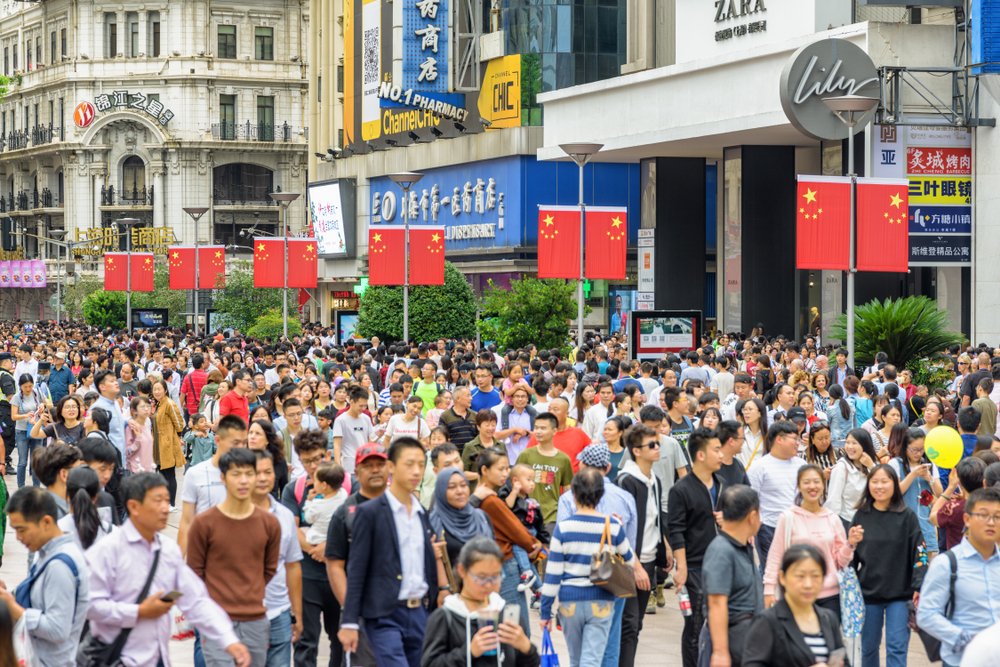
The viral videos and social media clips from Golden Week tell a fascinating story when you know how to read them. Take the massive traffic jams and crowded tourist sites that Western media loves to showcase as examples of dysfunction. What they’re actually showing you is an economy where people have disposable income and the confidence to spend it.
The crowds at attractions like Minshan Mountain in Dunhuang and the Bund in Shanghai aren’t signs of poor planning – they’re indicators of robust domestic demand. Shanghai alone saw a **32% year-on-year jump** in overall tourism orders on the first day of Golden Week [3]. This isn’t the behavior of consumers worried about economic collapse; it’s the activity of people who believe in their economic future.
The Infrastructure Success Story
One aspect that gets consistently overlooked in Western coverage is the sheer logistical achievement of managing 2.36 billion passenger trips. China’s integrated transportation network – combining high-speed rail, aviation, and road systems – operated with remarkable efficiency during peak demand. The national railway system added temporary trains, airports optimized flight schedules, and digital ticketing systems enabled smooth passenger flows even during record-breaking usage.
This operational success reflects decades of infrastructure investment paying dividends. Managing the world’s largest holiday migration with such efficiency demonstrates both institutional strength and public trust. People travel when they have confidence in the system’s ability to get them where they’re going safely and on time.
The Economic Reality Behind the Headlines
While Western media focuses on supposed warning signs, international financial institutions are telling a different story. The World Bank recently upgraded China’s 2025 growth forecast from 4% to **4.8%**, bringing it closer to China’s official target of around 5% GDP growth [4]. This upgrade came despite ongoing trade tensions with the United States, suggesting that China’s domestic economy has proven more resilient than many predicted.
The manufacturing sector continues to demonstrate strength, with China maintaining its position as the world’s largest manufacturing powerhouse for 15 consecutive years. The country contributed approximately **30% of global manufacturing added value** in 2024, while goods exports grew **7% year-on-year** in the first half of 2025 [5]. These aren’t the metrics of an economy in decline.
Consumer Confidence in Action
Perhaps the most telling aspect of Golden Week is what it reveals about consumer psychology. The shift toward experiential consumption – with families increasingly favoring travel, cultural events, and leisure activities – indicates a population optimizing for quality of life rather than hoarding resources out of economic fear.
The emergence of new tourism trends like low-altitude aerial sightseeing, regional gourmet festivals, and immersive cultural experiences shows an economy evolving toward higher-value consumption. This isn’t the behavior pattern of consumers bracing for economic collapse; it’s the activity of people investing in experiences and lifestyle enhancement.
The Policy Support Framework
The Chinese government’s proactive approach to supporting domestic consumption during Golden Week demonstrates sophisticated economic management. Local authorities launched digital vouchers, promotional events, and discount campaigns to encourage spending. The government issued **69 billion yuan in special bonds** to support trade-in programs for consumer goods, contributing to over **2 trillion yuan in domestic sales** between January and August [1].
These measures collectively helped transform potential consumption into actual economic growth, aligning with China’s broader strategy of rebalancing toward a consumption-driven, innovation-oriented economy.
What the Data Actually Shows
When you strip away the narrative and focus on the numbers, a clear picture emerges. China’s Golden Week represents more than just a holiday – it’s a demonstration of economic vitality that directly contradicts the collapse narrative. The record travel numbers, robust consumption data, and continued export strength paint a picture of an economy that has successfully adapted to global challenges while maintaining domestic momentum.
The foreign exchange reserves hitting their highest level in a decade, industrial profits rebounding by **20.4%** in August 2025, and manufacturing continuing to attract **26.77% of total foreign direct investment** all point to an economy that international investors and institutions view as stable and profitable [5].
The Credibility Gap
The persistent disconnect between Western media narratives and ground-level reality in China raises important questions about information quality and analytical frameworks. While headlines continue to predict imminent collapse, the actual data consistently shows an economy that, while facing challenges, remains fundamentally robust and adaptive.
The Golden Week phenomenon illustrates this gap perfectly. What gets portrayed as chaos and dysfunction is actually a massive, well-coordinated economic stimulus powered by consumer confidence and supported by sophisticated infrastructure and policy frameworks.
Looking Forward
As China continues to evolve its economic model toward domestic consumption and high-value manufacturing, events like Golden Week provide valuable insights into the real trajectory of the world’s second-largest economy. The ability to mobilize billions of trips and sustain record consumption levels demonstrates the depth of China’s consumer base and the adaptability of its growth model.
For observers trying to understand China’s economic reality, the lesson is clear: look at what people do, not just what headlines say. The 2.36 billion passenger trips during Golden Week represent 2.36 billion individual decisions by people confident enough in their economic future to travel and spend money. That’s not the behavior of a population in a collapsing economy – it’s the activity of a society that believes in its continued prosperity.
The only thing that seems to be collapsing is the credibility of those who keep predicting China’s economic demise while the data continues to prove them wrong.
—
## References
[1] CGTN: “China’s golden week data shows an economy on the move” – [https://news.cgtn.com/news/2025-10-07/China-s-golden-week-data-shows-an-economy-on-the-move-1HheiLqehd6/p.html](https://news.cgtn.com/news/2025-10-07/China-s-golden-week-data-shows-an-economy-on-the-move-1HheiLqehd6/p.html)
[2] Global Times: “China’s Golden Week sees record rail travel, unleashing tourism-driven economic momentum” – [https://www.globaltimes.cn/page/202510/1344908.shtml](https://www.globaltimes.cn/page/202510/1344908.shtml)
[3] Global Times: (Same as above) – [https://www.globaltimes.cn/page/202510/1344908.shtml](https://www.globaltimes.cn/page/202510/1344908.shtml)
[4] CNBC: “World Bank raises China growth forecast to 4.8% despite U.S. trade tensions” – [https://www.cnbc.com/2025/10/07/world-bank-raises-china-growth-forecast-trade-tensions.html](https://www.cnbc.com/2025/10/07/world-bank-raises-china-growth-forecast-trade-tensions.html)
[5] China Daily: “Forex reserves hit highest level in decade” – [https://global.chinadaily.com.cn/a/202510/08/WS68e59c87a310f735438b3c7f.html](https://global.chinadaily.com.cn/a/202510/08/WS68e59c87a310f735438b3c7f.html)