
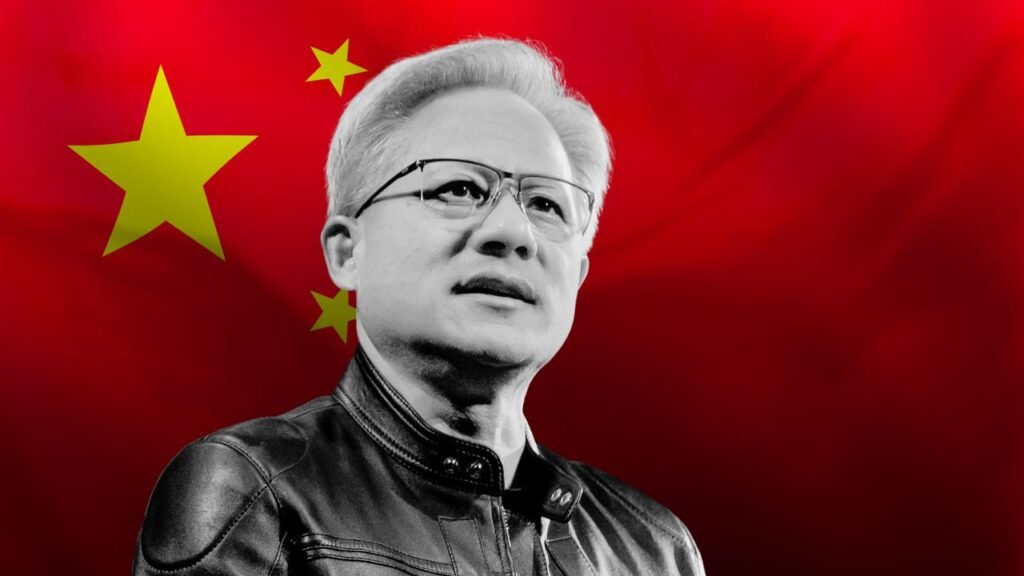
A monumental statement from the CEO of the world’s most valuable chip company has sent shockwaves through the tech and geopolitical landscapes. Jensen Huang, the founder and CEO of Nvidia, has declared that “China is going to win the AI race.” While Huang later softened his tone, his initial, unequivocal statement, made at the Financial Times’ Future of AI Summit, points to a reality that many have seen coming. This isn’t just a prediction; it’s an acknowledgment of fundamental advantages that are already in place. The race for artificial intelligence supremacy, the most consequential technology race of the 21st century, may be tilting decisively in China’s favor due to a powerful combination of low-cost green energy, a massive talent pool, and a strategic miscalculation by the United States.
When the leader of a company that was once a primary supplier to China’s tech giants—a market worth $15 billion in revenue before US restrictions—makes such a declaration, it demands serious attention [1]. For years, the narrative has been one of a neck-and-neck competition. However, a closer look at the underlying factors reveals a different story. China has been methodically building an ecosystem designed for AI dominance, and the results are now becoming undeniable.
The Green Energy Engine of AI
The development and operation of advanced artificial intelligence are incredibly energy-intensive. The country that can produce the most electricity in the most cost-effective manner will have a profound and sustainable advantage. In this critical arena, China is not just leading; it is lapping the competition. The beautiful irony is that this advantage is largely fueled by what some Western politicians have dismissed as a “green energy scam.”
China’s extraordinary build-up of renewable energy sources has driven its electricity costs to levels that are simply unattainable in the West. This stark difference in energy cost directly translates to a competitive edge in the capital-intensive field of AI development.
Country | Average Industrial Electricity Cost (per kWh) |
China | $0.088 [2] |
United States | $0.19 [2] |
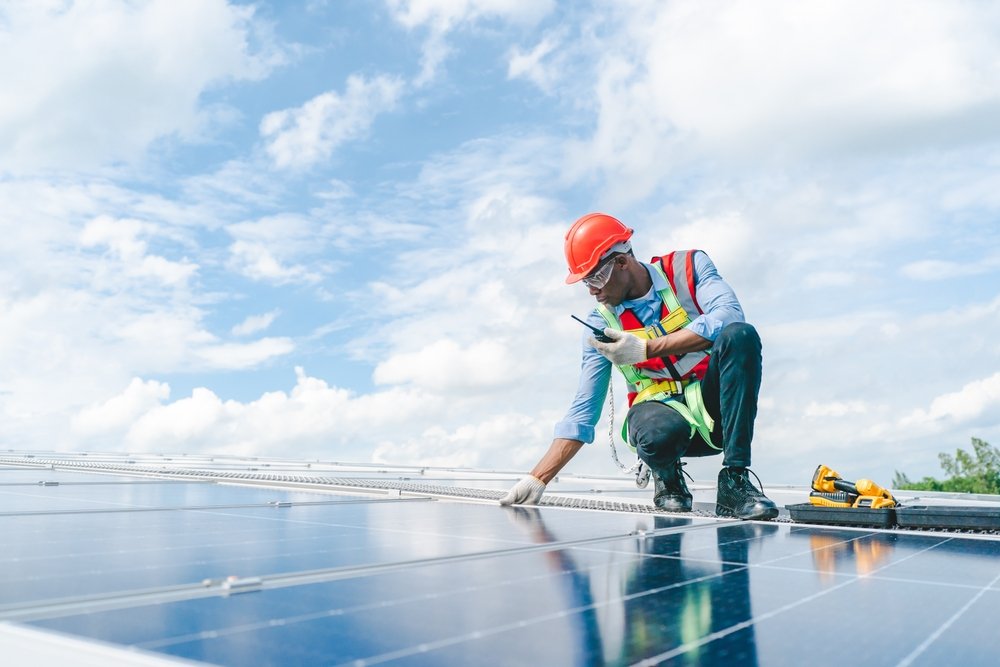
As the data shows, industrial power in China is more than twice as cheap as in the United States. This cost advantage is a direct result of a national strategy focused on dominating the green energy sector. In 2024 alone, China’s clean energy investment exceeded $625 billion, nearly tripling that of the United States [3]. The country added a record 264 Gigawatts (GW) of wind and solar capacity in just the first half of 2025, and its total solar capacity has now surpassed an astonishing 1,000 GW [4]. While former President Trump has advocated for doubling down on fossil fuels, China’s massive investment in solar, wind, and hydro power is creating an economic reality that makes it the world’s most efficient location for energy-hungry AI data centers.
The Unrivaled Talent Pool
An even more significant advantage for China is its dominance in human capital. Groundbreaking AI is built by brilliant minds, and a staggering percentage of the world’s top AI talent is of Chinese origin. According to a 2025 study by a UN-backed organization, the numbers are overwhelming.
A study of nearly 200,000 researchers and 100,000 high-impact papers has revealed that the vast majority of the world’s top 100 brains in the field of artificial intelligence are of Chinese origin. [5]
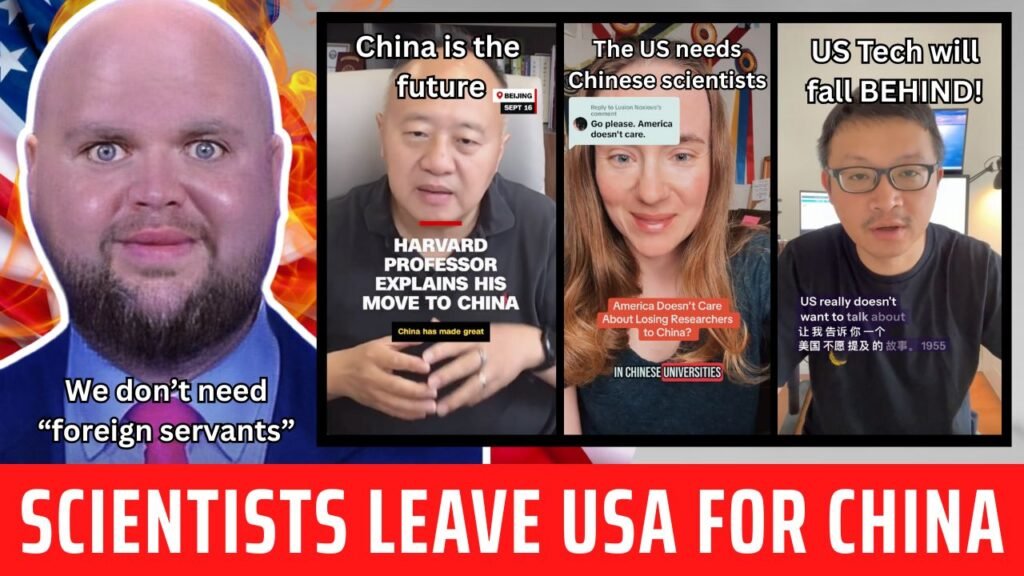
Out of the top 100 AI experts globally, a total of 65 are of Chinese descent, with 50 working in China and another 10 working in the United States [5]. This extends beyond the elite tier; China’s overall AI talent pool has swelled to over 50,000 researchers, and the country now accounts for nearly half (47%) of all top AI researchers in the world [6]. This talent pipeline, fueled by a massive population and a focused educational system, represents a strategic asset that is incredibly difficult for any other nation to replicate.
A Backfiring Strategy: The Rise of Open-Source AI
Perhaps the most ironic twist in this story is how US policy, intended to cripple China’s AI ambitions, has instead accelerated its rise. By restricting Nvidia’s ability to sell its advanced microchips to China, the US government inadvertently forced its largest overseas client to become its most formidable competitor.
This move backfired almost immediately. Cut off from top-tier American hardware, China’s tech giants and the state poured resources into developing a domestic chip industry. More importantly, it catalyzed a powerful movement toward open-source AI. Chinese companies like DeepSeek and Alibaba began releasing powerful, world-class AI models whose source code and weights are available for anyone to use, modify, and distribute. This strategy has been wildly successful.
Chinese open-source models now dominate global rankings, frequently outperforming models from Google and Meta [7]. Alibaba’s Qwen model family has become the world’s largest open-source AI ecosystem, with over 100,000 derivative models built upon it, surpassing Meta’s Llama community [7]. Even Jensen Huang himself has described the large language models from Chinese firms as “world-class” and called the open-source movement a “catalyst for global progress” [7]. The attempt to create a technological blockade has instead fostered a resilient, innovative, and collaborative ecosystem that is now setting the global pace.
The Inevitable Conclusion
When you combine an insurmountable energy cost advantage, a near-monopoly on top talent, a thriving open-source ecosystem, and the world’s largest data pool, the conclusion becomes clear. Jensen Huang’s statement wasn’t a controversial prediction; it was an observation of an established reality. The United States, by focusing on restrictive policies and clinging to outdated energy sources, may have already ceded its leadership position.
The race for AI supremacy is about more than just technological prowess; it’s about strategic vision, economic fundamentals, and human capital. On all these fronts, China has built a lead that may now be impossible to overcome.
Jensen Huang just stating the obvious.