BRUSSELS/BEIJING – The European Union and China have announced a significant breakthrough in their protracted trade dispute over electric vehicles (EVs), agreeing to a framework that allows for the replacement of punitive tariffs with a system of minimum import prices. This development, announced on January 12, 2026, marks a crucial de-escalation in a trade conflict that has strained relations between the two economic giants for over a year.
The agreement provides a pathway for Chinese EV manufacturers to apply for “price undertakings,” which, if approved by the European Commission, would exempt them from the countervailing duties imposed in October 2024. These tariffs, ranging from 7.8% to 35.3%, were the result of an EU anti-subsidy investigation that concluded Chinese-made EVs benefited from unfair government support, posing a threat to the European automotive industry.
The Path to an Agreement
The dispute began in October 2023 when the European Commission launched an anti-subsidy investigation into Chinese electric vehicles. The investigation concluded a year later with the imposition of significant tariffs, a move that was met with strong opposition from Beijing. China subsequently initiated its own probes into European products, including cognac, dairy, and pork, signaling a potential for a wider trade war.
The new agreement, which the China Chamber of Commerce to the EU has termed a “soft landing,” allows for a resolution through dialogue and negotiation. Under the new framework, Chinese automakers can propose a minimum price for their vehicles sold in the EU. This price must be deemed sufficient to offset the “injurious effects” of the subsidies they receive. The European Commission will evaluate each proposal individually, considering factors such as future investment plans within the EU.
Date | Event |
October 2023 | EU launches anti-subsidy investigation into Chinese EVs. |
October 2024 | EU imposes countervailing tariffs of 7.8% to 35.3% on Chinese EVs. |
Late 2024 | China initiates retaliatory investigations into EU agricultural products. |
January 2026 | EU and China announce a framework for price undertakings as an alternative to tariffs. |
Implications for the Automotive Industry
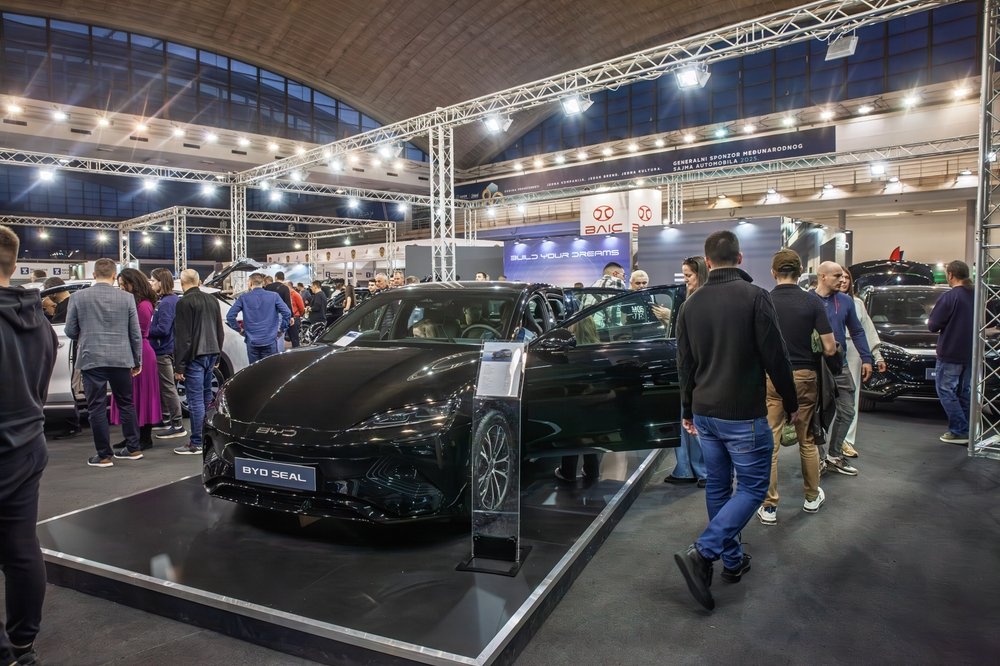
The agreement has been met with a mix of relief and cautious optimism from the automotive industry and market analysts. For Chinese manufacturers like BYD, Geely, and SAIC, it offers a potential route to avoid the steep tariffs and continue their expansion into the European market. Even with the tariffs in place, Chinese EV brands saw their market share in the EU grow to 6% in the first half of 2025, and analysts project this could double to around 10% by 2030.
European automakers, who have been facing increasing competition from lower-priced Chinese models, will be watching closely to see how the minimum pricing structure is implemented. The EU’s investigation had highlighted concerns about the potential for “irrecoverable losses” and the impact on the 2.5 million direct and 10.3 million indirect jobs in the EU’s automotive sector. However, many European manufacturers also have deep ties to the Chinese market and rely on Chinese components, including batteries and computer chips, creating a complex web of interests.
A “Soft Landing” and Future Outlook
Both sides have publicly welcomed the agreement as a positive step. China’s Ministry of Commerce hailed it as an “important breakthrough” that demonstrates a mutual willingness to resolve disputes through consultation and safeguard the rules-based international trade order. The European Commission has emphasized that the process will be conducted with objectivity and fairness, in line with World Trade Organization rules.
While the agreement provides a framework for resolution, the long-term impact will depend on the specific price undertakings negotiated and approved. Some Chinese companies, like BYD, are already moving to establish manufacturing facilities within the EU, a strategy that would bypass the tariff issue altogether. The Volkswagen Group’s Chinese joint venture has reportedly already submitted a price undertaking offer, indicating that the industry is moving quickly to adapt to the new landscape.
This agreement represents a significant de-escalation in the EU-China trade relationship, offering a path away from a potentially damaging trade war. The focus now shifts to the implementation of the price undertaking system and its effectiveness in creating a level playing field for all players in the rapidly evolving global electric vehicle market.
References
[2] AP News: China, EU agree on a plan to resolve dispute over imports of Chinese-made EVs
[3] Reuters: China hits EU dairy with tariffs, broadening trade conflict
[4] Euronews: EU and China take new step to resolve row over subsidised electric vehicles