
In a significant move to bolster its domestic semiconductor industry, China has introduced a new player, AMIES Technology. This emerging company is poised to challenge the dominance of the Dutch giant ASML in the critical field of lithography, the technology that underpins modern chip manufacturing.
A Strategic Spin-Off
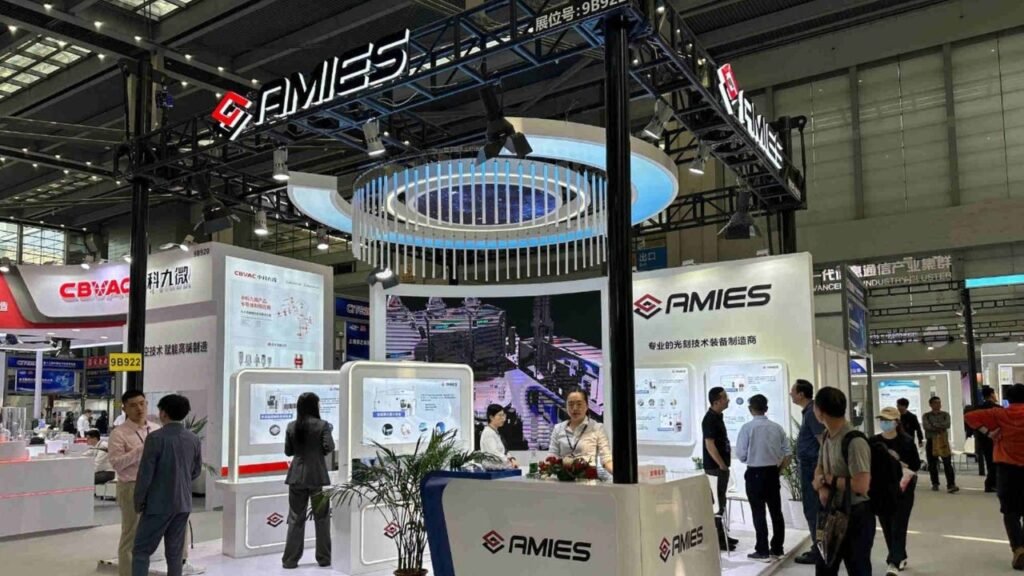
AMIES, which was spun off from the state-owned Shanghai Micro Electronics Equipment (SMEE) in February, made its debut at the WeSemiBay Semiconductor Ecosystem Expo 2025 in Shenzhen. The company showcased a range of products, including advanced lithography machines, laser-annealing systems, and inspection tools, signaling its ambition to become a key supplier in the global semiconductor supply chain.
While its parent company, SMEE, has been a major force in back-end semiconductor processes, AMIES is focused on the more technologically challenging front-end of wafer fabrication. This strategic division of labor is intended to accelerate the commercialization of Chinese-made lithography equipment, a critical bottleneck in the nation’s quest for chip self-sufficiency.
The Uphill Battle for Technological Independence
China’s semiconductor ambitions have been hampered by US export controls, which restrict its access to the most advanced deep ultraviolet (DUV) and extreme ultraviolet (EUV) lithography systems from ASML. These machines are essential for producing the most powerful and efficient chips used in everything from smartphones to supercomputers.
Currently, China’s most advanced domestic lithography tools are capable of producing chips at the 90-nanometer node and above. While a significant achievement, this still lags behind the cutting-edge technology of global leaders. The development of a 28-nm lithography machine by SMEE, though briefly announced and later retracted, indicates that China is making progress, but the road to technological parity is still long.
A New Hope for China's Chip Industry
The emergence of AMIES represents a renewed sense of optimism in China’s ability to break its reliance on foreign technology. By focusing on rapid commercialization and innovation, AMIES could play a pivotal role in closing the technology gap and establishing China as a major force in the global semiconductor landscape.
As the tech war between the US and China continues to escalate, the development of a robust domestic semiconductor industry has become a top priority for Beijing. The success of companies like AMIES will be crucial in determining the future of the global technology ecosystem.


Wish AMIES success and bright future!