
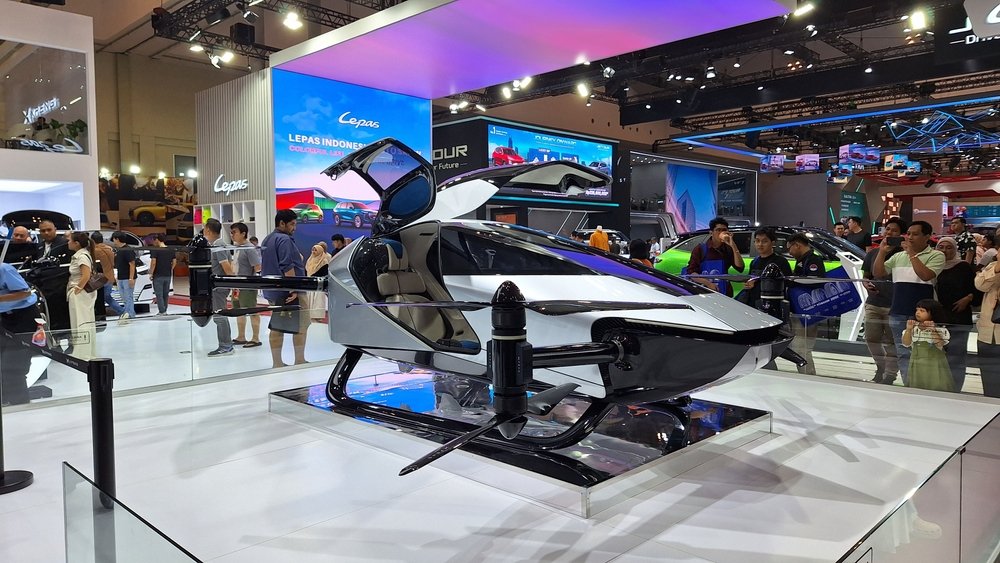
A new economic frontier is opening up in the skies above China. The “low-altitude economy,” a sprawling sector encompassing everything from delivery drones and flying taxis to sightseeing flights and emergency rescue, is rapidly emerging as a strategic national priority and a powerful new engine for growth. Fueled by massive government investment, ambitious policy support, and a surge of technological innovation, China is positioning itself to dominate this nascent industry, with market projections soaring into the trillions of yuan.
The low-altitude economy refers to a wide range of commercial activities in airspace generally below 1,000 meters, though it can extend up to 3,000 meters [1]. It represents a convergence of advanced manufacturing, the digital economy, and new consumption models, creating a vibrant ecosystem of unmanned aerial vehicles (UAVs), electric vertical take-off and landing (eVTOL) aircraft, and the infrastructure to support them. The Civil Aviation Administration of China (CAAC) forecasts the market will hit 1.5 trillion yuan (about $211 billion) by 2025 and expand to a staggering 3.5 trillion yuan (about $489 billion) by 2035 [2, 3].
The Scale of Ambition: Policy and Investment
Beijing has firmly signaled its commitment to the low-altitude economy, identifying it as a “new growth engine” in its 2024 Government Work Report and enshrining it as a strategic emerging industry in the 15th Five-Year Plan [1]. This high-level backing has unleashed a torrent of investment and entrepreneurial activity. As of mid-2025, China was home to 89,000 active enterprises related to the sector, with nearly 11,700 new companies registering in the first five months of the year alone—a 220% year-on-year surge [2].
This national ambition is being translated into action at the local level. About 30 provincial-level regions have integrated the low-altitude economy into their development plans, creating a network of pilot zones and offering substantial incentives to attract companies and talent [1, 2]. Guangdong province has emerged as a leader, boasting over 15,000 related firms, nearly a third of the national total. Its key cities—Shenzhen, Guangzhou, and Zhuhai—form a dynamic hub for innovation and application.
Shenzhen, in particular, has become the country’s most active pilot zone, planning over 1,000 flight routes and 1,200 take-off sites by 2026. The city offers a reward of 15 million yuan for each certified passenger eVTOL, a powerful incentive driving the industry forward [1].
Pioneering the Skies: Key Players and Innovations
At the forefront of this boom are innovative companies developing a new generation of aerial vehicles. While the sector is crowded, a few key players have achieved significant breakthroughs.
Company | Key Aircraft | Notable Achievements |
EHang | EH216-S AAV | World’s first type-certificated passenger-carrying autonomous eVTOL [4, 5] |
AutoFlight | V2000CG CarryAll | World’s first certified large cargo eVTOL [5] |
DJI | N/A (Drones) | Dominates over 70% of the global consumer and commercial drone market [6] |
EHang, a Guangzhou-based pioneer, made global headlines in October 2023 when its EH216-S, a two-seat autonomous aerial vehicle, became the first eVTOL in the world to receive a type certificate for passenger-carrying operations [5]. The company has since conducted over 40,000 demonstration flights in 19 countries and is beginning to offer limited commercial sightseeing flights in Guangzhou and Hefei [5].
“The authorities have found a new industry they want Chinese firms to dominate,” noted The Economist, highlighting the strategic push behind companies like EHang [7].
Shanghai-based AutoFlight has focused on the logistics space, achieving a world-first of its own. Its V2000CG CarryAll cargo drone was the first large eVTOL to complete the full certification process, boasting a 400 kg payload and a range of 250 km [5]. Meanwhile, the broader UAV landscape remains dominated by DJI, a company that grew from a college dorm room project in 2006 to command over 70% of the global drone market today [6].
From Drones to Flying Taxis: Expanding Applications
The applications of the low-altitude economy are vast and transformative. Beyond the headline-grabbing potential of flying taxis, the sector is already making an impact in numerous areas:
•Logistics and Delivery: Drones are revolutionizing urban logistics, with companies like i-KINGTEC providing integrated “drone-network-cloud” solutions for everything from inspecting power lines to delivering small packages [2].
•Emergency Services: All-electric aircraft are being designed for medical rescue missions, firefighting, and rapid emergency response, capable of bypassing ground traffic to reach critical sites faster [2].
•Urban Governance and Smart Cities: In the China-Singapore Tianjin Eco-City, small, autonomous drones are deployed from lotus-pod-shaped airports to conduct environmental inspections without human intervention [2].
•Tourism and Entertainment: Sightseeing flights in eVTOLs are becoming a reality, while spectacular drone light shows, like the one featuring 1,000 drones in Bamako, Mali, showcase the technology’s cultural applications [2].
•Agriculture and Forestry: UAVs are used for crop-spraying, monitoring forest health, and managing natural resources with unprecedented efficiency.
Navigating the Turbulence: Challenges and Headwinds
Despite the rapid progress, China’s low-altitude ambitions face significant challenges. The regulatory framework is still playing catch-up with the pace of technological innovation. Oversight is fragmented across military, civil aviation, and local government bodies, creating a complex and sometimes inconsistent regulatory landscape [1]. A draft revision to the Civil Aviation Law, the first in 30 years, aims to create unified supervision and smarter airspace management, but a timeline for its implementation remains unclear [1].
Safety is the paramount concern. Regulators are proceeding with caution, adopting a “three-firsts” principle: cargo before passengers, segregation before integration, and suburban before urban operations [1]. After a surge of test flights in 2022 and 2023, authorities have reportedly “deliberately cooled the temperature,” with internal guidance limiting new passenger-carrying operations until at least 2026 [1]. High-profile incidents, including a mid-air collision of two eVTOLs at an airshow rehearsal, have underscored the critical tension between innovation and safety [1].
“Even if technology and policy are ready, people need time to trust a new mode of flight… without transparency on safety or insurance, it’s difficult for such a young industry to win real buy-in,” an EHang representative told Channel News Asia [1].
Technological dependencies also present a hurdle. While China leads in consumer drones, the more advanced passenger-grade eVTOLs still rely on imported core components like chips, sensors, and flight-control systems, which can slow down certification and increase costs [1].
The Road Ahead: A Sky-High Trajectory
Despite the headwinds, the trajectory of China’s low-altitude economy appears set for a steep ascent. The combination of unwavering government support, a massive domestic market, and a fiercely competitive and innovative private sector creates a powerful tailwind. The challenges of regulation and public trust are significant but not insurmountable, and the government’s methodical, safety-first approach aims to build a sustainable foundation for long-term growth.
Analysts draw parallels to China’s electric vehicle industry, which, after a period of policy-driven growth and consolidation, now leads the world [5]. The low-altitude economy is on a similar path. As Emerson Xu, CEO of consultancy NexAvian, noted, China is compressing a century-long learning curve in aviation into a matter of years. “With its national focus and engineering ingenuity,” he stated, “I believe China will eventually catch up, and even overtake” [1].
From delivering packages in bustling cities to providing emergency medical services in remote areas, the low-altitude economy promises to reshape Chinese society in profound ways. The journey is just beginning, but the sky is, quite literally, the limit.
References
[1] IN FOCUS: What’s low-altitude economy, and is China struggling to make it fly? – CNA [2] Low-altitude economy soars as China’s new growth engine – People’s Daily Online [3] Graphics: Booming low-altitude economy in China – CGTN [4] EHang – Wikipedia [5] The Great Chinese Electric VTOL Revolution – Forbes [6] DJI Drones in the U.S. Consumer Market – DRONELIFE [7] China’s “low-altitude economy” is taking off – The Economist


When this technology and system mature in China, the rest of the world will follow. China will dominate this industry in the future.