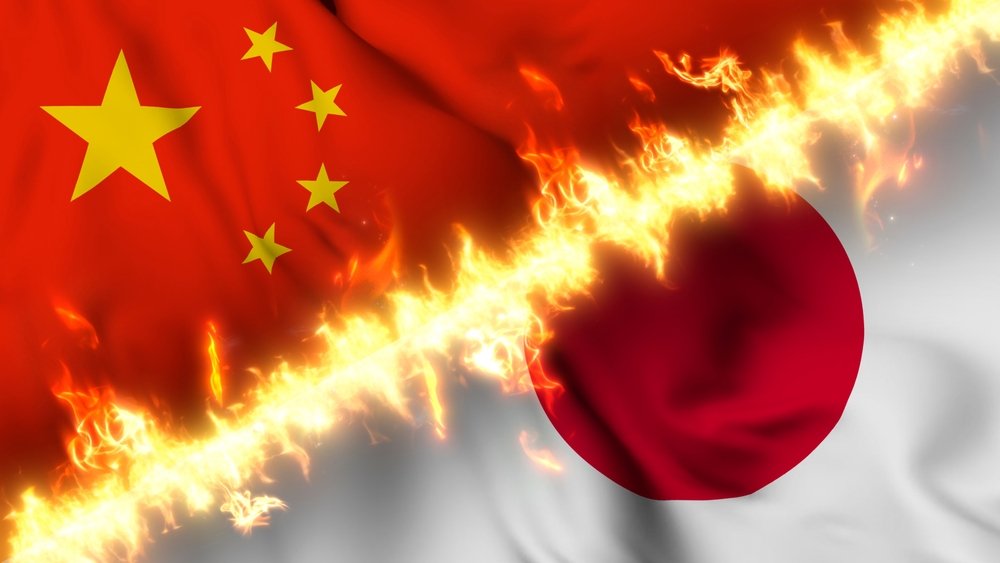
BEIJING – In a move that threatens to severely hamper Japan’s defense capabilities, China has imposed an immediate and sweeping ban on the export of dual-use items to Japanese military end-users. The decision, announced by China’s Ministry of Commerce on Tuesday, is a direct response to what Beijing has termed “erroneous” comments by Japanese Prime Minister Sanae Takaichi regarding Taiwan, escalating an already tense diplomatic standoff between the two Asian powers.
The export controls target a wide range of goods, services, and technologies that have both civilian and military applications. According to a catalogue published by the ministry, this includes critical components such as rare earth elements, advanced electronics, aerospace and aviation components, drones, and nuclear-related technology. The ban explicitly prohibits the sale of these items to any Japanese military end-users or for any purpose that contributes to “enhancing Japan’s military strength”.
This move is widely seen as a strategic blow to Japan’s military modernization efforts. Modern defense systems are heavily reliant on the very technologies now restricted by Beijing. For instance, rare earth elements are indispensable for a vast array of advanced weaponry, including the F-35 fighter jets that form a cornerstone of Japan’s air defense. By cutting off the supply of these critical materials, China is directly targeting the operational readiness and future development of the Japan Self-Defense Forces.
The catalyst for this drastic measure was Prime Minister Takaichi’s statement in November, where she suggested that a Chinese invasion of Taiwan would constitute a “survival-threatening situation” for Japan, potentially justifying a military response under the principle of collective self-defense.
Beijing, which considers Taiwan a renegade province, reacted furiously, denouncing the remarks as a “crude interference in China’s internal affairs”
This export ban is the latest in a series of punitive economic measures taken by China against Japan. Following Takaichi’s comments, Beijing has already cut flights, issued travel warnings to its citizens, and suspended seafood imports from Japan. The weaponization of trade, particularly in rare earths, is a familiar tactic for Beijing. In 2010, China imposed a similar embargo on rare earth shipments to Japan following a maritime dispute over the Senkaku/Diaoyu Islands, causing significant disruption to global supply chains.
The long-term implications of this ban could be profound. It not only jeopardizes Japan’s immediate military procurement and maintenance but also sends a chilling message to other nations in the region about the economic cost of challenging Beijing’s political red lines. As tensions in the Indo-Pacific continue to mount, China’s willingness to leverage its economic dominance as a tool of statecraft signals a new and more assertive phase in its foreign policy, with Japan’s military ambitions squarely in its crosshairs.