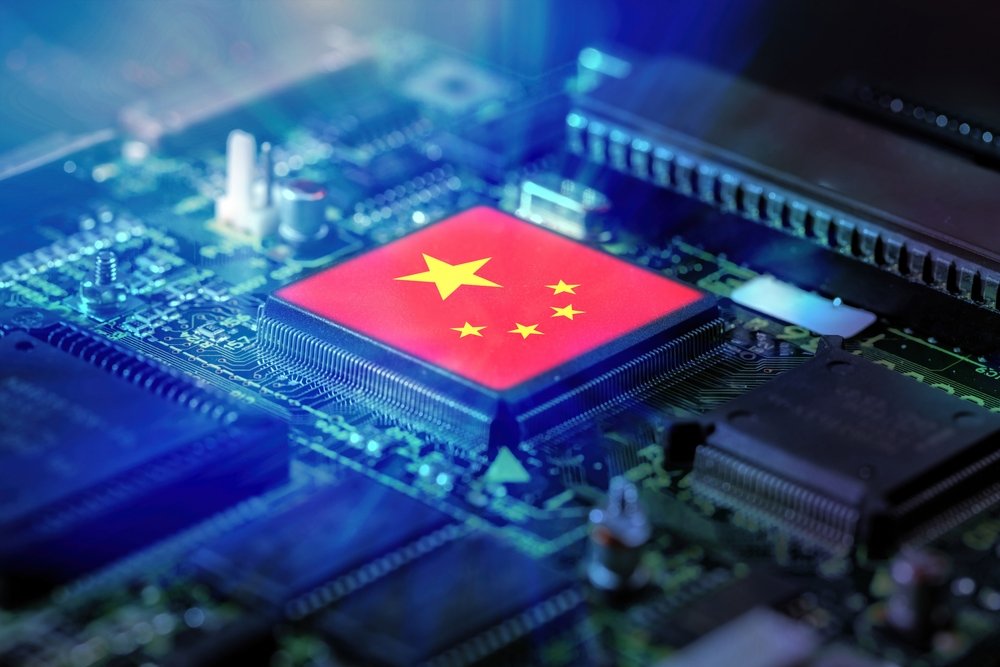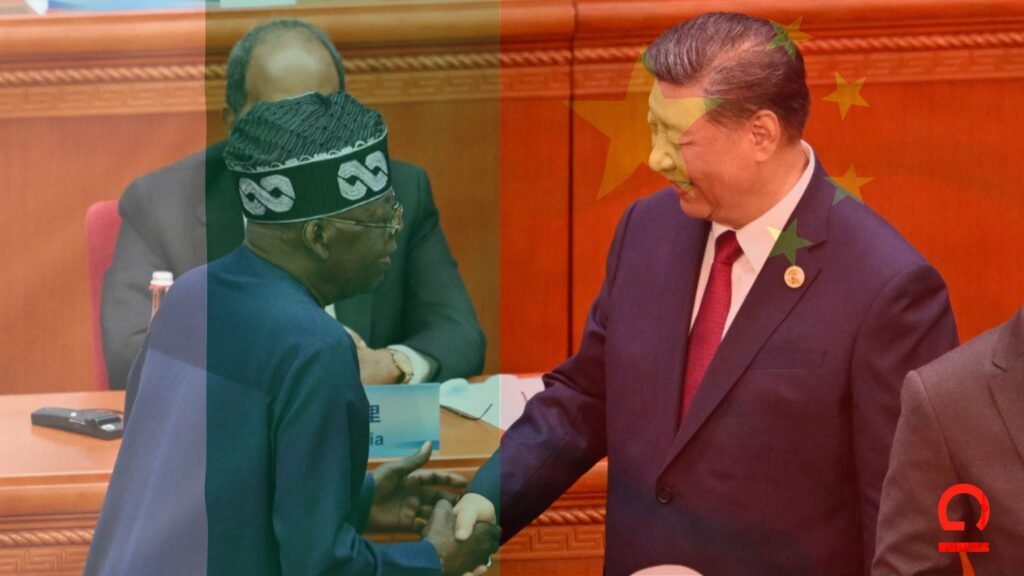
BEIJING, China – In a firm diplomatic rebuke, China has voiced strong opposition to threats of military action and sanctions made by the United States against Nigeria. The controversy erupted after former U.S. President Donald Trump accused the West African nation of failing to protect its Christian population, prompting a geopolitical standoff that highlights the competing interests of global powers in Africa.
On November 4, 2025, Chinese Foreign Ministry spokeswoman Mao Ning declared Beijing’s stance, stating that China “firmly opposes any country using religion and human rights as an excuse to interfere in other countries’ internal affairs and threatening other countries with sanctions and force” [1]. This statement came in response to a series of social media posts by Trump, who on November 2 threatened to go into Nigeria “guns-a-blazing” and instructed the Pentagon to prepare for possible military action [2].
“If the Nigerian Government continues to allow the killing of Christians, the U.S.A. will immediately stop all aid and assistance to Nigeria, and may very well go into that now disgraced country, ‘guns-a-blazing,’ to completely wipe out the Islamic Terrorists who are committing these horrible atrocities,” Trump stated [2].
The threats followed Trump’s redesignation of Nigeria as a “Country of Particular Concern” for alleged severe violations of religious freedom, a claim that has gained traction in some right-wing and evangelical circles in the U.S. [3].
Nigeria and China's United Front
The Nigerian government has forcefully rejected the accusations. In Berlin, Nigerian Foreign Minister Yusuf Tuggar asserted his country’s commitment to religious freedom, holding up a document titled “Nigeria’s Constitutional Commitment to Religious Freedom and Rule of Law.” He stated, “It’s impossible for there to be religious persecution that can be supported in any way, shape or form by the government of Nigeria at any level” [4].
Nigerian President Bola Tinubu, a Muslim from the country’s south who is married to a Christian pastor, also pushed back, saying, “The characterization of Nigeria as religiously intolerant does not reflect our national reality” [2].
China’s defense of Nigeria is rooted in a deep and growing strategic and economic partnership. In September 2024, the two nations established a comprehensive strategic partnership. China is Nigeria’s largest trade partner in Africa, and Chinese firms have invested heavily in the country’s infrastructure, energy, and mining sectors as part of the Belt and Road Initiative (BRI) [5]. Since September 2023 alone, Chinese companies have poured over $1.3 billion into Nigeria’s lithium processing industry, a critical component of the global green energy transition [5].
Country | Position & Rationale | Key Actions | Economic Stakes |
United States | Alleges severe religious persecution of Christians. | Redesignated Nigeria as a “Country of Particular Concern”; threatened military action and aid cuts. | Primarily focused on human rights narrative and domestic political constituencies. |
China | Opposes interference in internal affairs; supports Nigeria’s sovereignty. | Issued strong diplomatic statement of support for Nigeria. | Protecting over $1.3B in recent mining investments and broader BRI infrastructure projects. |
Nigeria | Rejects claims of religious persecution; emphasizes constitutional protections and complex security challenges. | Officials publicly refuted U.S. claims and highlighted the country’s religious diversity. | Seeking to maintain sovereignty and manage complex internal security threats without external military intervention. |
A Complex Reality on the Ground
While the U.S. narrative focuses on a targeted war against Christians, the reality of the violence in Nigeria is far more complex. Africa’s most populous nation, with 238 million people, is almost evenly split between Muslims and Christians [4]. The country faces a multi-faceted security crisis involving various actors and motives.
In the northeast, the extremist group Boko Haram has waged a brutal insurgency for over a decade, targeting both Christians and Muslims who do not adhere to their radical ideology. In the country’s central region, long-standing conflicts between predominantly Muslim Fulani herders and largely Christian farming communities are primarily driven by disputes over land and water resources, rather than religion alone [2] [4].
Analysts and Nigerian officials stress that people of all faiths have been victims of the violence. According to Amnesty International, over 10,000 people have been killed since President Tinubu took office two years ago, with the majority of victims being Muslims in the country’s north, where attacks are most frequent [4].
China’s vocal support for Nigeria underscores a broader geopolitical dynamic. As the U.S. increasingly frames its foreign policy around human rights and democracy, China is positioning itself as a reliable economic partner that respects national sovereignty, a message that resonates with many developing nations. By defending Nigeria, Beijing not only safeguards its significant economic investments but also reinforces its model of non-interference, presenting a clear alternative to the U.S. approach in a continent that has become a key arena for great power competition.
References
[1] Anadolu Agency. “China opposes using ‘religion, human rights’ to interfere in Nigeria amid US threats.” [2] NPR. “Trump threatens Nigeria with potential military action.” [3] Al Jazeera. “Nigeria pushes back on Trump’s claims over Christian killings.” [4] Al Jazeera. “Nigeria pushes back on Trump’s claims over Christian killings.” [5] Business Insider Africa. “China stands with Nigeria amid US pressure, safeguards $1.3bn mining stake.”