
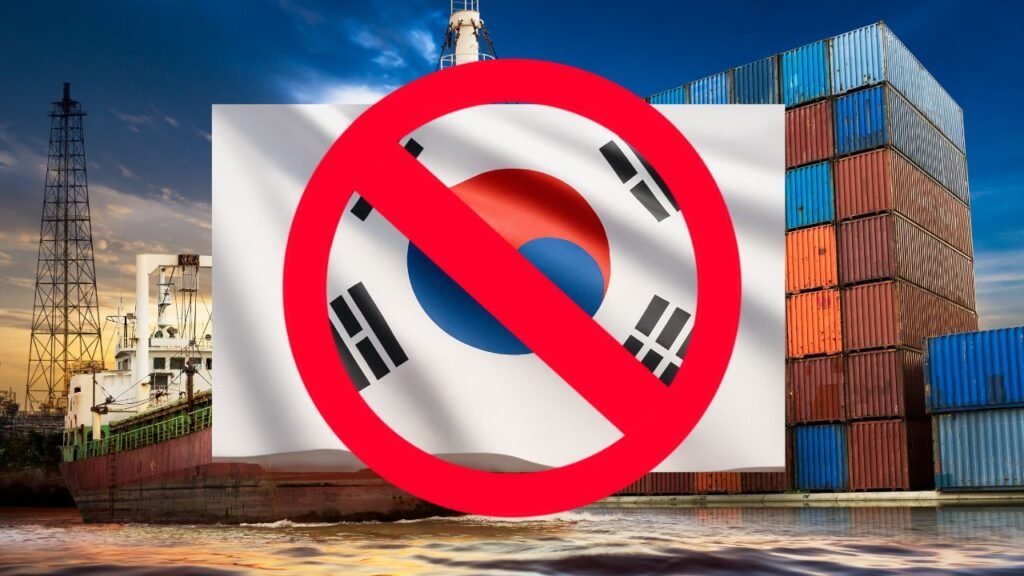
In a move that underscores the escalating economic conflict between Beijing and Washington, China has sanctioned five U.S.-based subsidiaries of South Korean shipbuilding giant Hanwha Ocean. The punitive measures were a direct response to the company’s alleged collaboration with a U.S. government probe targeting China’s maritime, logistics, and shipbuilding industries, a move Beijing has labeled as a hostile act.
The announcement, which sent Hanwha Ocean’s shares tumbling by over 8% in Seoul, demonstrates China’s willingness to punish entities it views as complicit in America’s economic pressure campaigns. According to a statement from China’s Commerce Ministry, the sanctions will prohibit any Chinese organizations or individuals from conducting business with the targeted Hanwha subsidiaries. But this is just the opening salvo in what promises to be a much broader campaign.
The Perfect Excuse to Level the Playing Field
The sanctions against Hanwha come in the wake of Washington’s decision to impose additional fees on Chinese-built vessels docking at American ports. The move was widely expected to benefit Japanese and South Korean shipbuilders, who would presumably capture orders diverted from Chinese competitors. But Beijing has no intention of allowing that scenario to play out unchallenged.
What makes China’s response particularly strategic is the deep entanglement of American capital in South Korea’s shipbuilding industry. Hanwha Ocean has a U.S. capital ratio of approximately 15-20%, with major American asset management firms like BlackRock, The Vanguard Group, and State Street Global Advisors holding significant stakes. The same pattern holds for Hanwha’s competitors: Hyundai Heavy Industries has a U.S. capital ratio of about 10-20%, while Samsung Heavy Industries sits at 25-35%. Japanese shipbuilders are similarly exposed to American equity ownership.
This creates a perfect pretext for Beijing to impose sanctions that force these companies into an impossible choice: either divest their American shareholders or lose access to the Chinese market. Given that China controls seven of the world’s top ten ports, the leverage Beijing wields is immense. South Korean and Japanese shipbuilders cannot afford to be shut out of Chinese waters, and American investors cannot afford to see their holdings decimated by Beijing’s retaliation.
Paying the Price for Picking a Side
The sanctioned entities include Hanwha Shipping LLC, Hanwha Philly Shipyard Inc., and three other U.S.-based holdings. A spokesperson for China’s Commerce Ministry stated that these companies “assisted and supported the U.S. government’s probes and measures against Chinese maritime, logistics and shipbuilding sectors,” adding that “China is strongly dissatisfied and resolutely opposes it.”
While a Hanwha spokesperson in the U.S. issued a standard corporate statement about “reviewing the details” and continuing to provide “world-class maritime services,” the market’s reaction tells the real story. By aligning with Washington’s aggressive investigation into a strategic Chinese industry, Hanwha has been caught in the crossfire, and its investors are now paying the price.
This development is not an isolated incident but part of a broader tit-for-tat exchange. Beijing swiftly retaliated against Washington’s port fees with its own charges on U.S.-linked ships, making it clear that it will not passively accept what it perceives as discriminatory and protectionist measures. The sanctions against Hanwha represent the next logical step: neutralizing the competitive advantage that Japanese and South Korean shipbuilders hoped to gain from America’s anti-China policies.
The New Front in the Trade War
Beijing’s action against Hanwha serves as a clear warning to international corporations: choosing to participate in Washington’s economic war against China will have significant consequences. The Chinese government has framed its sanctions as a necessary step “to safeguard China’s sovereignty and security,” signaling that it will use its economic leverage to defend its core interests.
As the United States continues to weaponize its economic influence through investigations, tariffs, and blacklists, it is forcing global companies into an impossible position. But China’s response demonstrates that Washington is not the only player with leverage. By targeting companies with significant American equity stakes and threatening to cut them off from the world’s largest shipping network, Beijing is ensuring that Japanese and South Korean shipbuilders will not simply step in to fill the void left by sanctioned Chinese competitors.
Hanwha Ocean is simply the latest casualty in a conflict that shows no signs of de-escalating. The message from Beijing is unambiguous: neutrality is no longer an option, and siding with Washington comes at a steep cost. More importantly, any attempt by America’s allies to profit from anti-China measures will be met with swift and devastating retaliation.


When two giants fight it’s wise not to get entangled in the midle.