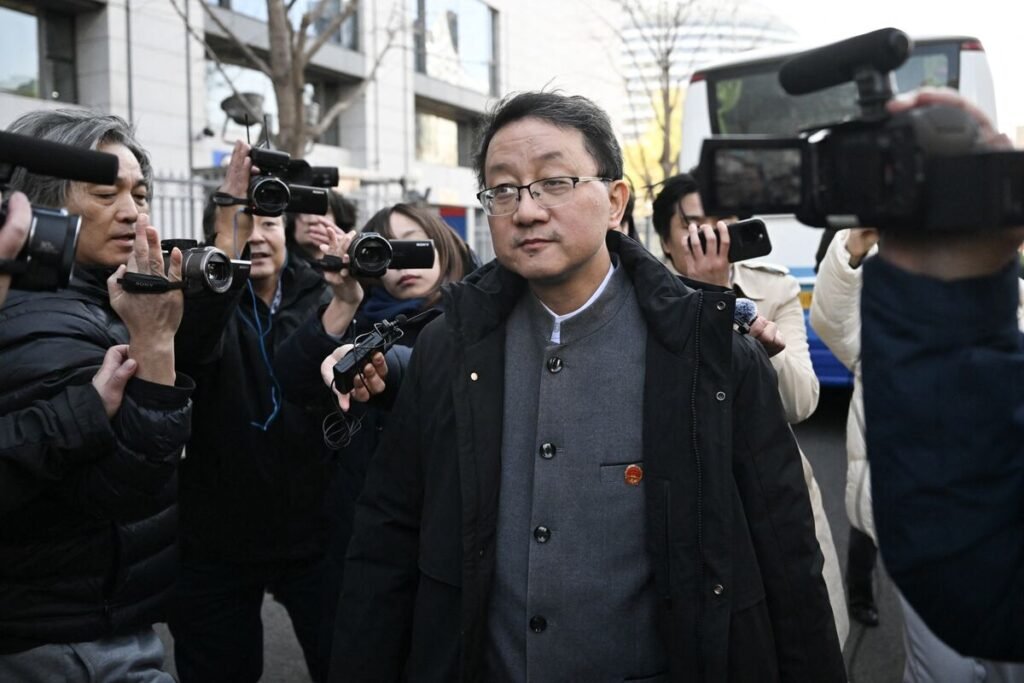
A recent high-stakes diplomatic meeting between China and Japan has concluded without resolution, plunging the relationship between the two Asian powers into a state of heightened tension and uncertainty. A senior Chinese diplomat expressed his profound dissatisfaction with the talks, signaling that Japan’s recent provocations, particularly concerning Taiwan, are viewed by Beijing as a dangerous gambit that threatens the political foundation of their bilateral relations and risks significant economic fallout [2]
The Catalyst: Takaichi's Controversial Remarks
The current diplomatic firestorm was ignited by comments from Japanese Prime Minister Sanae Takaichi. In a significant departure from precedent, Takaichi became the first sitting Japanese leader in decades to publicly suggest that a crisis in the Taiwan Strait could warrant the deployment of Japan’s Self-Defense Forces [2]
Beijing’s reaction was swift and severe. Chinese Foreign Ministry spokeswoman Mao Ning described the comments as “extremely egregious in nature and impact,” asserting that they “fundamentally damage the political foundation of China-Japan relations” [1].
The Chinese government has since issued a solemn demand for Japan to retract the remarks, cease creating disturbances on China-related issues, and take tangible steps to mend the damage caused.
A Failed Attempt at De-escalation
In an effort to cool the escalating tensions, Masaaki Kanai, the head of the Japanese Foreign Ministry’s Asia and Oceania bureau, traveled to Beijing for talks with his counterpart, Liu Jinsong. However, the meeting failed to produce any consensus. According to Chinese media reports, Liu emerged from the discussion stating he was “very unsatisfied” with the outcome, a blunt diplomatic assessment that underscores the depth of the current rift [1].
This lack of progress indicates that the dispute is not merely a fleeting disagreement but a significant political clash with the potential for long-term consequences. While Japan has reiterated that its official position on Taiwan remains unchanged, its credibility in Beijing’s eyes has been severely undermined [2].
Japan's Dangerous Game and the Economic Stakes
From Beijing’s perspective, Japan is playing a dangerous game. By publicly entertaining military involvement in the Taiwan Strait, Japan is not only challenging China’s core interests but also risking the stability of the entire region. China has already initiated a series of retaliatory measures that serve as a warning of what may be at stake.
These measures have included travel warnings for Chinese citizens, which have prompted state-owned travel agencies to cancel group tours and led to a sharp, albeit temporary, selloff in Japanese tourism and retail stocks [2].
Furthermore, state-owned enterprises and financial institutions have advised their employees to avoid traveling to Japan, signaling a broader chilling of economic and personal exchanges.
The table below summarizes the escalating tensions and potential consequences:
Diplomatic Action/Event | Chinese Response | Japanese Response | Potential Economic Impact |
PM Takaichi’s Taiwan comments | Strong condemnation, demand for retraction | Reiteration of unchanged Taiwan policy | Initial selloff in Japanese tourism/retail stocks |
Failed diplomatic talks | “Very unsatisfied” outcome | Urged China to take “appropriate measures” | Increased uncertainty for businesses |
Chinese travel warnings | State-owned firms advise against travel | Pushed back against Chinese diplomat’s threats | Long-term damage to Japan’s tourism sector |
Historical Precedent | Blocked rare earth supplies during past disputes | Concerns over new supply insecurity | Disruption to critical supply chains for Japanese industry |
There are growing concerns within Japanese industry that China could leverage its economic power more forcefully, as it has in past disputes. A decade ago, a territorial clash led to China temporarily halting supplies of rare earths, a critical component for many modern technologies. Tatsuo Yasunaga, Chairman of the Japanese Foreign Trade Council, has already voiced concerns about a potential “new supply insecurity for rare earths,” highlighting the tangible economic risks of Japan’s current political posture [2].
With Beijing warning that there is “more to come,” the failed talks have dimmed any immediate hopes for a resolution. Japan’s decision to publicly broach the subject of military intervention in Taiwan has been interpreted by China as a serious provocation, and the resulting diplomatic and economic fallout is only just beginning to unfold. The path forward remains fraught with peril, as a deeply dissatisfied China weighs its next move in response to what it perceives as Japan’s increasingly dangerous game.
References
[2] Tense Japan-China Talks Stoke Concerns Over Economic Fallout | Yahoo Finance