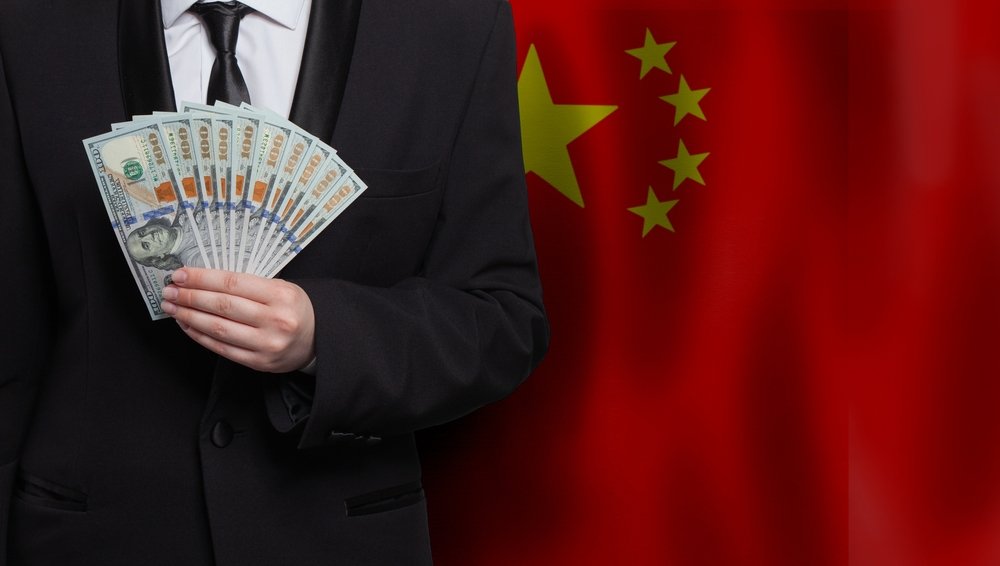
BEIJING – China has intensified its move away from the US dollar, cutting its holdings of American government debt to the lowest level since 2008. The move comes amid rising concerns over US debt sustainability, with one leading Chinese economist describing the system as a “Ponzi scheme” that Beijing no longer wants to be a part of.
According to data from the US Treasury Department, China’s stockpile of Treasuries fell to $682.6 billion in November 2025, a nearly 10% drop in under a year. This marks the ninth consecutive month of selling from Beijing and a 17-year low for its holdings of US debt.
Shao Yu, chief economist at Fudan University’s Sci-tech Innovation Management Research Centre, offered a stark assessment of the situation. “The massive accumulation of debt resembles a Ponzi scheme, where larger volumes of new debt are used to replace the old,” he stated. “China doesn’t want to play this game any more”.
This sentiment reflects a growing international skepticism regarding the long-term stability of US debt, which now exceeds $38 trillion. Even US Federal Reserve Chairman Jerome Powell has admitted that while the debt level is currently sustainable, “the path is not”.
A Strategic Pivot to Gold
As China divests from US Treasuries, it is simultaneously bolstering its reserves with a different asset: gold. The People’s Bank of China (PBOC) has been on a buying spree, increasing its gold holdings for 14 consecutive months.
By the end of 2025, the country’s official gold reserves stood at over 2,300 tonnes, accounting for 8.5% of its total foreign exchange reserves.
In 2023 alone, China purchased 225 tonnes of gold, the highest amount of any central bank globally, signaling a clear strategy to hedge against the risks of a dollar-denominated system.
China’s Reserve Shift | November 2025 | Change (YTD) |
US Treasury Holdings | $682.6 Billion | ▼ ~10% |
Gold Reserves | 2,306 Tonnes | ▲ 14 straight months |
The Broader Dedollarization Trend
China’s actions are part of a wider dedollarization movement among emerging economies. The BRICS bloc (Brazil, Russia, India, China, and South Africa) is actively developing alternative payment systems to reduce its reliance on the US dollar.
Bilateral trade between China and Russia is now predominantly conducted in yuan and rubles, completely bypassing the dollar. Similar agreements are in place with other nations, including Brazil.
This collective effort has contributed to the share of US dollars in global reserves falling to a multi-decade low of around 57-58%.
Concerns over the politicization of the US Federal Reserve, particularly with the potential for a second Trump administration, have further fueled Beijing’s desire to de-risk its exposure to American financial instruments.
As the global financial landscape shifts, China’s strategic dumping of US debt sends a powerful message about the future of the dollar.
References