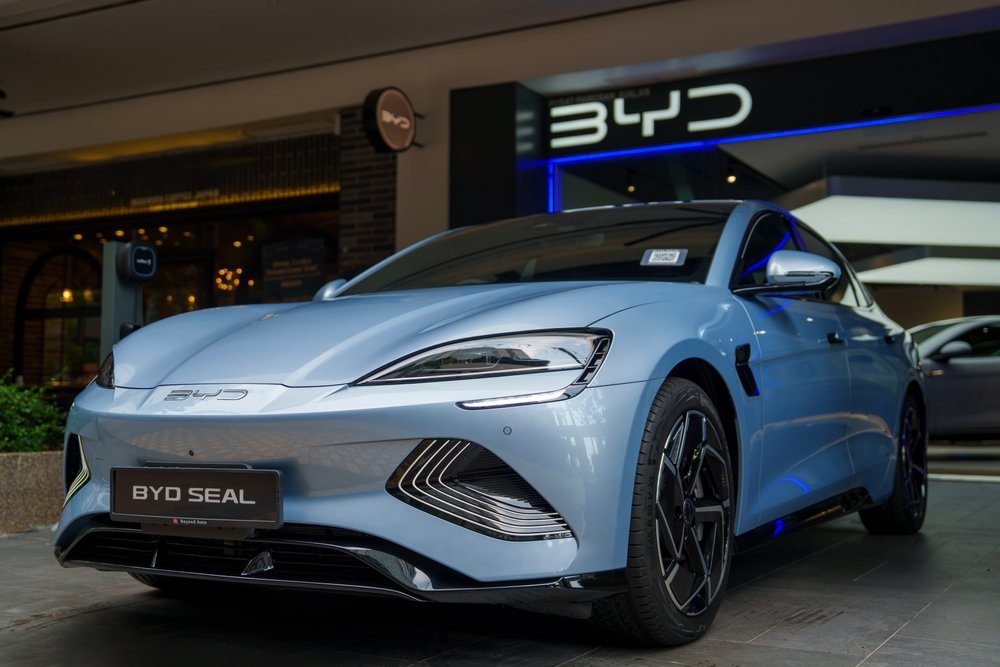
In a stunning display of global momentum, Chinese electric vehicle (EV) manufacturer BYD has officially declared the United Kingdom its largest market outside of China thanks to a jaw-dropping 880% year-on-year sales increase in September alone.
According to the company, BYD sold 11,271 vehicles in the UK last month, with the plug-in hybrid variant of its Seal U SUV leading the charge as its best-selling model in the country. That explosive growth has catapulted BYD to a 3.6% share of the entire UK new car market—a remarkable feat for a brand that only recently began scaling its presence on British shores.
Why the UK Loves BYD (and Why Others Don’t)
The UK’s openness to Chinese EVs stands in stark contrast to other major markets. While the European Union slapped Chinese electric cars with tariffs of up to 45% last year—citing unfair state subsidies—and the United States maintains prohibitively high import duties (supported by both Trump and Biden administrations), the UK has so far refrained from imposing tariffs on Chinese-made EVs.
This regulatory gap has created a golden opportunity for BYD, which offers competitively priced, tech-forward vehicles that undercut many Western rivals on cost without sacrificing range or features.
“BYD’s future in Britain looks hugely exciting,” said Bono Ge, the company’s UK manager, noting the recent opening of their 100th UK retail outlet—a clear signal of long-term commitment.
Record EV Sales, But Petrol Still Holds On
BYD’s surge is part of a broader EV boom in the UK. Data from the Society of Motor Manufacturers and Traders (SMMT) shows that pure battery electric vehicle sales hit a record 73,000 units in September, with plug-in hybrids growing even faster. Notably, two Chinese models the BYD Seal U and the Jaecoo 7 cracked the top 10 best-selling cars list, rubbing shoulders with established names like the Kia Sportage, Ford Puma, and Nissan Qashqai.
Yet despite this electric acceleration, petrol and diesel vehicles still accounted for over half of all new car sales last month proof that the UK’s transition to full electrification remains a work in progress.
Subsidies That Exclude China
Ironically, while the UK welcomes Chinese EVs tariff-free, it excludes them from government incentives. In July, the UK government launched a £650 million ($875 million) subsidy scheme, offering buyers up to £3,750 off select EVs from brands like Nissan, Peugeot, and Vauxhall. But Chinese-made vehicles including BYD are ineligible, due to concerns over the carbon footprint of their manufacturing process.
BYD has publicly criticized the policy, arguing it undermines fair competition and could harm the UK’s own automotive ambitions in the long run. “If we’re serious about accelerating EV adoption,” the company implies, “shouldn’t we welcome all clean vehicles regardless of origin?”
Global Context: BYD vs. the World
This UK success comes as BYD continues to outpace global competitors. Despite a slowdown in its home market, the Shenzhen-based giant remains ahead of Tesla in total global EV sales and has left legacy European automakers like BMW and Jaguar trailing in its wake.
With more hybrid and electric models slated for UK launch in the coming months, BYD isn’t just riding the EV wave it’s helping to shape it.
Final Thoughts
The UK’s EV landscape is evolving rapidly, and BYD’s meteoric rise reveals a crucial truth: in the race to electrify, policy, pricing, and perception matter just as much as technology. Whether the UK continues to be a welcoming harbor for Chinese EVs or follows the EU and US down a protectionist path could define the next chapter of its automotive future.