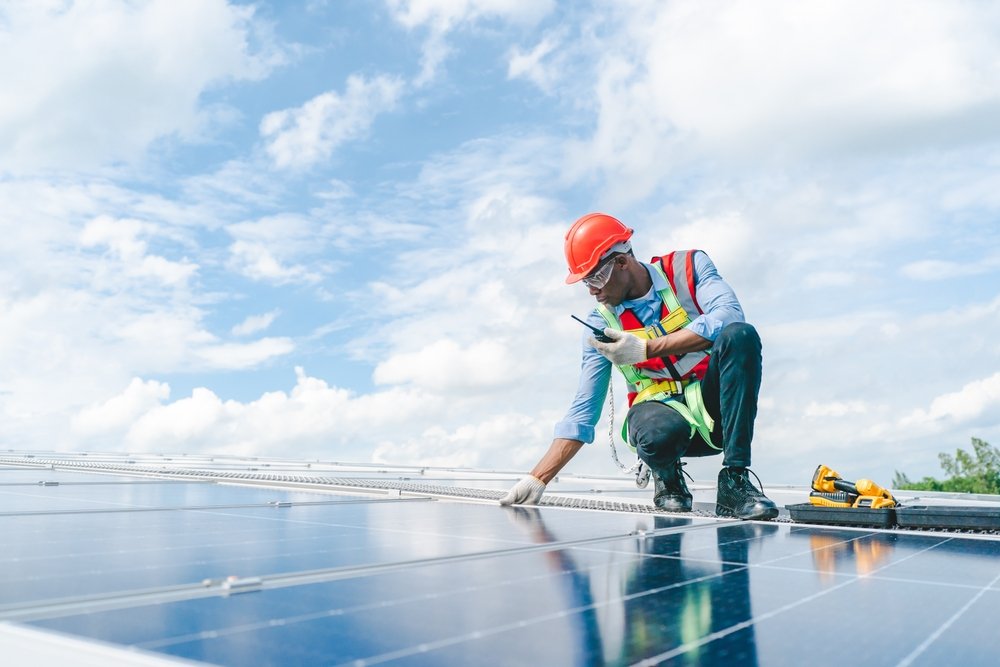
A massive surge in solar panel imports from China is transforming Africa’s energy landscape at an unprecedented pace, promising a brighter future for millions who have long been left in the dark. This solar boom, driven by falling costs and the urgent need for reliable power, is not just about electricity; it’s about economic empowerment, energy independence, and a cleaner, more sustainable path forward for the continent
Recent data reveals a dramatic acceleration in Africa’s adoption of solar energy. In the twelve months leading up to June 2025, the continent’s imports of Chinese-made solar panels skyrocketed by 60%, reaching a record 15,032 megawatts (MW) [1]. This remarkable growth is not confined to a few nations; it’s a continent-wide phenomenon, with twenty African countries setting new import records during this period. The number of nations importing at least 100 MW of solar panels has jumped from 15 to 25 in just one year, signaling a widespread and decisive shift towards renewable energy.
The impact of this solar influx is particularly profound in countries that have historically struggled with energy access. In Sierra Leone, for instance, the solar panels imported in the last year alone have the potential to generate electricity equivalent to 61% of the country’s total 2023 output. For Chad, that figure stands at a remarkable 49% [1]. This surge in capacity promises to be a game-changer for communities and businesses that have been hampered by unreliable grids and frequent power outages.
The Driving Forces Behind the Solar Boom
Several factors are fueling Africa’s solar revolution. The most significant is the dramatic drop in the cost of solar technology, largely due to China’s massive manufacturing scale and technological advancements. As the world’s largest producer, China accounted for 80% of global solar panel production in 2024, and its continued innovation is expected to drive costs down even further [2]. This has made solar power the cheapest form of electrical energy in history, a critical factor in a continent where cost is a major consideration.
Another key driver is the pressing need for reliable power. Many African nations are grappling with failing power grids and insolvent utilities, leading to widespread load shedding and blackouts. Solar panels offer a modular, rapidly deployable solution to plug these energy deficits. As former Liberian Public Works Minister W. Gyude Moore noted, “Africa’s relative poverty has meant cost matters more in Africa than elsewhere…panels are the best fit: modular and rapidly deployable technology to plug these deficits” [3].
The economic benefits extend beyond simply keeping the lights on. For many businesses and households, solar power offers a cost-effective alternative to expensive and polluting diesel generators. In Nigeria, for example, the savings from avoiding diesel can pay for the cost of a solar panel in as little as six months [1]. This rapid return on investment is a powerful incentive for private investment in solar, further accelerating its adoption.
Ut enim ad minim veniam, quis nostrud exercitation ullamco laboris nisi ut aliquip ex ea commodo consequat.
A Look at the Numbers
The scale of Africa’s solar transformation is best understood through the data. The following table, based on research from the energy think tank Ember, highlights the dramatic growth in solar panel imports across the continent [1].
|
Country |
Growth in Solar Panel Imports (12 months to June 2025) |
|
Algeria |
33-fold increase |
|
Zambia |
8-fold increase |
|
Botswana |
7-fold increase |
|
Sudan |
6-fold increase |
|
Liberia, DRC, Benin, Angola, Ethiopia |
More than tripled |
The Road Ahead
While the current surge in solar adoption is impressive, Africa’s journey towards universal energy access is far from over. Sub-Saharan Africa still has the world’s lowest electricity access rate, at just 53.3% in 2023, well below the global average of 91.6% [4]. However, the rapid growth of solar power offers a clear and achievable path towards closing this gap.
To fully realize the potential of solar energy, African nations will need to continue to invest in grid infrastructure, develop supportive policies, and foster a skilled workforce. The rise of domestic solar panel manufacturing in countries like Morocco and Egypt is a positive sign, and further investment in this sector will be crucial for long-term sustainability and energy independence.
Africa is home to 60% of the world’s best solar resources, yet it has only 1% of the world’s installed solar PV capacity [5]. The current boom in solar panel imports is a crucial first step in unlocking this immense potential. As the continent continues to embrace this clean, affordable, and reliable energy source, the future for Africa looks brighter than ever.
References
[1] The first evidence of a take-off in solar in Africa – Ember [2] Chinese solar panels rewire Africa for the future at record … [3] Chinese solar panels rewire Africa for the future at record … [4] Sub-Saharan Africa Electricity Access [5] Key findings – Africa Energy Outlook 2022 – Analysis