A stark contrast in global priorities reveals the shifting geopolitical landscape and America’s deepening isolation on the Palestinian question.
Published: December 2025
The Numbers Tell the Story
While the United States has provided at least $21.7 billion in military aid to Israel since the war in Gaza began on October 7, 2023, China has just announced a $100 million commitment for humanitarian aid and reconstruction in the Gaza Strip. The contrast is not merely financial—it reflects fundamentally different approaches to global leadership and responsibility.
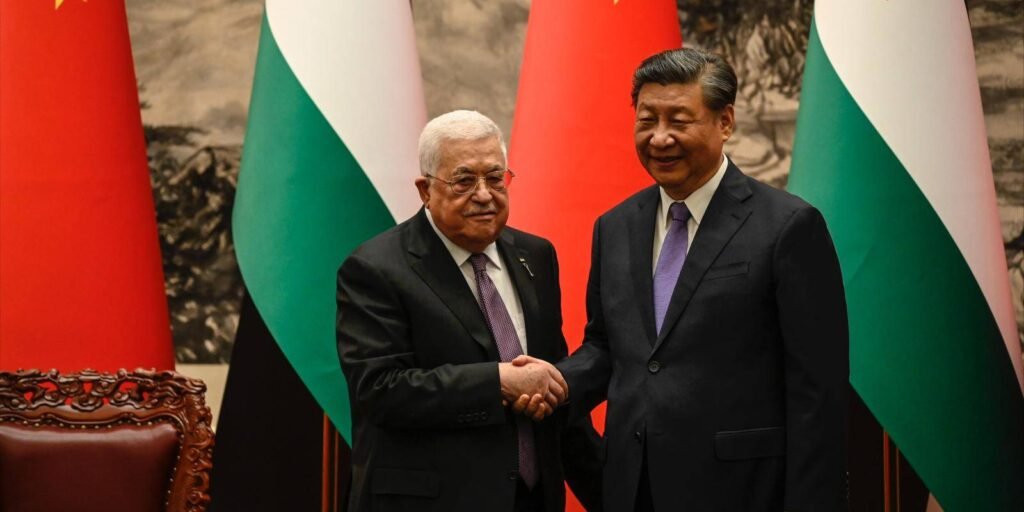
On December 4, 2025, Chinese President Xi Jinping announced the aid package during a joint press conference with French President Emmanuel Macron, who was on a state visit to Beijing. The timing and context of this announcement carry significant geopolitical weight, signaling a deliberate shift in how major powers are positioning themselves on the Israeli-Palestinian conflict.
A Geopolitical Statement, Not Just Charity
The announcement was far more than a simple humanitarian gesture. By making the declaration alongside France—a country that has recently recognized Palestinian statehood despite Israeli objections—Xi Jinping sent a clear message to Europe and the Global South: there is an alternative to American-led foreign policy on this issue.
According to analysis of the announcement, China’s aid package is designed not only to address the immediate humanitarian crisis but also to support “rapid recovery and reconstruction programs in the Gaza Strip.” This positions China as a builder and partner, while American military aid continues to fuel the destruction.
“This generous donation shows China’s unwavering stance in favour of truth and justice,” said Palestinian President Mahmoud Abbas in response to the announcement, according to reports from the Palestinian News and Info Agency (WAFA).
The contrast is instructive. While the United States vetoes ceasefire resolutions at the UN and maintains unwavering military support for Israel, China is building diplomatic bridges with European allies and positioning itself as the champion of international law and the two-state solution.
The Death Toll: Facts vs. Propaganda
The humanitarian crisis in Gaza has reached catastrophic proportions. According to the Gaza Ministry of Health, the death toll has exceeded 70,100 people as of late November 2025, with the vast majority being civilians. An independent UN inquiry found that approximately 46 percent of the 65,000 people killed were women and children.
These figures became the focal point of a viral confrontation at Beijing’s Xiangshan Forum in September 2025, where Yan Xuetong, dean of the Institute of International Relations at Tsinghua University, directly challenged Israeli military official Elad Shoshan on the scale of civilian casualties.
“You killed more than 70,000 civilians,” Yan stated bluntly. When Shoshan claimed this was “not fact,” Yan responded with a principle that cuts to the heart of the matter: “The facts are decided by the international community, it’s not decided by your government. Your government has no legitimacy and the right to decide or define what is fact.”
The exchange, which has since gone viral on social media, encapsulates the growing isolation of Israel’s narrative on the global stage. While Israeli officials continue to dispute casualty figures and justify military operations, the international community—increasingly including major powers like China—is rejecting these claims as propaganda.
China's Consistent Position on Palestinian Statehood
China’s stance on the Palestinian question has remained consistent for decades, grounded in international law and UN resolutions. At the Xiangshan Forum and in official statements, Chinese officials have repeatedly called for “the establishment of a fully sovereign and independent Palestinian state on the basis of the 1967 borders, with East Jerusalem as its capital.”
This position stands in sharp contrast to American policy, which has shifted dramatically over recent years. The Trump administration moved the US embassy to Jerusalem and recognized Israeli settlements as legitimate, moves that violated international consensus. The Biden administration, despite rhetorical support for a two-state solution, continued to provide unprecedented levels of military aid without conditioning it on Israeli compliance with international law.
The hypocrisy is stark: the United States claims to support Palestinian statehood while simultaneously arming the occupation that makes such a state impossible.
The Broader Geopolitical Shift
China’s $100 million commitment, while modest in absolute terms, carries outsized significance in the context of global power dynamics. It represents a deliberate choice to align with international law, to support reconstruction over destruction, and to challenge American hegemony in defining the terms of global discourse.
For the Global South—nations that have long felt abandoned by Western powers and their selective application of international law—China’s position offers an alternative. It suggests that there is a major power willing to invest in peace, reconstruction, and justice, rather than in military domination.
Meanwhile, the United States finds itself increasingly isolated. Its allies in Europe are distancing themselves, with France recognizing Palestinian statehood and other nations calling for accountability for potential war crimes. The American veto at the UN Security Council has become a symbol of obstruction rather than leadership.
What This Means for the Future
The contrast between China’s $100 million for reconstruction and America’s $21.7 billion for military aid represents more than a difference in spending priorities. It reflects a fundamental divergence in how these powers see their role in the world and their commitment to international law.
As the world watches, it becomes increasingly clear that the old order—where American military might determined the rules of engagement—is giving way to a multipolar system where other powers are willing to challenge American narratives and offer alternative visions of global justice.
For the Palestinian people, this shift offers a glimmer of hope. But it also underscores the tragic reality: while China invests in reconstruction, the bombs continue to fall. The international community’s failure to enforce a ceasefire and hold Israel accountable remains the greatest injustice of all.
Key Facts and Sources
•US Military Aid to Israel: $21.7 billion since October 7, 2023 [Source: Costs of War, Brown University]
•China’s Gaza Aid: $100 million announced December 4, 2025 [Source: Reuters]
•Gaza Death Toll: 70,100+ confirmed by Gaza Ministry of Health as of November 2025 [Source: Reuters]
•Yan Xuetong Debate: Occurred at Beijing’s Xiangshan Forum, September 2025 [Source: South China Morning Post]
•Palestinian Response: President Abbas thanked China for the aid commitment [Source: WAFA]
Related Reading
•The Geopolitics of Gaza: How China is Reshaping Global Alliances
•US Military Aid to Israel: A Historical Overview
•The Two-State Solution: International Law and the Path Forward
•Yan Xuetong on International Relations and the Future of Global Governance