The world just witnessed a tectonic shift in global trade, and it happened without a single shot fired. While Washington was busy building tariff walls, Beijing quietly rerouted its entire export machine, smashing through a $1 trillion trade surplus for the first time in history. The United States, once China’s biggest customer, has been relegated to the sidelines in a stunning display of economic power and strategic realignment.
For the first 11 months of 2025, China’s trade surplus in goods surged to an unprecedented $1.08 trillion [1]
November alone contributed a staggering $111.68 billion, the highest monthly figure since June, blowing past forecasts and reversing a brief slump in October [1]
Exports didn’t just recover; they roared back with a 5.9% year-on-year jump, defying predictions of a slowdown and proving the resilience of China’s manufacturing dominance [1]
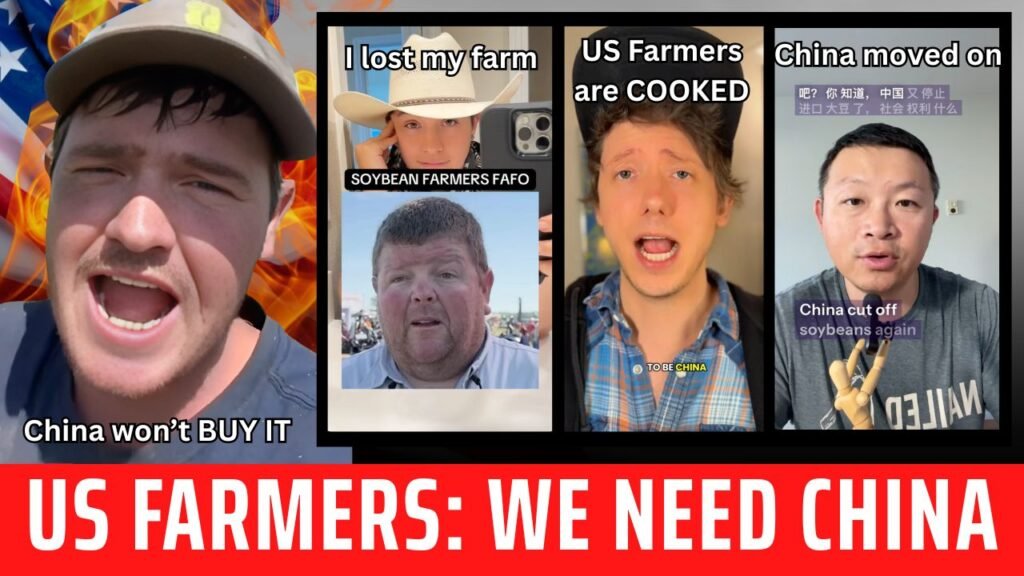
But here’s the kicker: the U.S. was barely a footnote in this story. While China’s global exports were booming, shipments to the United States plummeted by a staggering 28.6% in November to just $33.8 billion [1]
The tariff war, intended to cripple Chinese trade, instead acted as a catalyst for Beijing to build a new, more resilient global network—one that no longer depends on American consumers.
|
Trade Metrics (November 2025) |
Value/Growth |
Source |
|
Total Trade Surplus |
$1.08 Trillion (YTD) |
China’s General Administration of Customs |
|
November Trade Surplus |
$111.68 Billion |
China’s General Administration of Customs |
|
YoY Export Growth |
+5.9% |
China’s General Administration of Customs |
|
YoY Exports to U.S. |
-28.6% |
China’s General Administration of Customs |
|
YoY Exports to E.U. |
+14.8% |
China’s General Administration of Customs |
|
YoY Exports to Australia |
+35.8% |
China’s General Administration of Customs |
|
YoY Exports to SE Asia |
+8.2% |
China’s General Administration of Customs |
The Great Rerouting: How China Bypassed U.S. Tariffs
Instead of buckling under pressure, Chinese exporters executed a masterful pivot. The goods once destined for American ports were rerouted to Europe, Southeast Asia, Australia, and beyond. Exports to the European Union surged by 14.8%, while Australia saw a massive 35.8% jump in Chinese imports [1]
The rapidly growing economies of Southeast Asia also increased their intake of Chinese goods by 8.2% [1]
This wasn’t a desperate scramble; it was a calculated strategy. By diversifying its customer base, China has effectively insulated its export economy from U.S. protectionism. The result is a global trade map that has been fundamentally redrawn. The old, unipolar world of trade, with the U.S. at its center, is gone. In its place is a multipolar network with China as a primary hub, connecting a vast and diverse web of economies.
This strategic diversification has been so successful that it has more than compensated for the slump in U.S. demand. As Zichun Huang of Capital Economics noted, the weakness in U.S. exports was “more than offset by shipments to other markets” [1]
This resilience is further bolstered by what analysts are calling a rise in the price competitiveness of Chinese goods, driven by deflationary pressures that have lowered China’s real effective exchange rate [1]
Geopolitical Shockwaves: Europe Wakes Up to the New Reality
The aftershocks of this trade realignment are now being felt in the corridors of power across Europe. French President Emmanuel Macron, fresh from a state visit to Beijing, has already sounded the alarm. In a recent interview, he warned that Europe might have to follow Washington’s lead and impose its own tariffs if China’s massive trade surplus isn’t addressed [1]
But it may be too little, too late. China’s rerouted supply chains make it incredibly difficult for any single region to exert meaningful pressure. Tariffs from Brussels might slow down direct trade, but they won’t stop the flow of goods through third-party countries and new manufacturing hubs. China has created a distributed, resilient network that is far less vulnerable to the protectionist policies of any one nation or bloc.
This new reality leaves Western policymakers scrambling. The old playbook of tariffs and trade wars has been rendered obsolete. China has demonstrated that it can not only withstand the pressure but also use it to its advantage, forging new alliances and deepening its economic integration with the rest of the world.
Industry Outlook: The Dawn of “China Shock 2.0”
The implications for global industries are profound. We are on the cusp of what could be called “China Shock 2.0,” a new era of industrial recalibration driven by these shifting trade dynamics.
1. Supply Chain Migration: Expect to see a continued migration of manufacturing and assembly hubs. As China reroutes its exports, it will also shift its investment and production capabilities to new regions, particularly in Southeast Asia and Latin America. This will create new industrial corridors and further decentralize global manufacturing.
2. Intensified Competition: With Chinese goods flooding new markets, local industries in Europe, South America, and Africa will face intensified competition. This will likely lead to political friction and calls for protectionist measures, but as we’ve seen, such measures may have limited effect against China’s diversified network.
3. Strategic Sector Dominance: China’s export growth is not just about volume; it’s also about value. Key sectors like semiconductors, shipbuilding, and automobiles are showing above-average growth, even as China’s domestic economy faces headwinds from a struggling property sector and sluggish consumer spending [1]
This indicates a strategic focus on capturing high-value industries and moving up the global value chain.
4. The U.S. Dilemma: For the United States, the challenge is immense. Having been effectively bypassed in the new global trade map, American policymakers must now confront the reality that their primary economic weapon has been neutralized. The U.S. can no longer dictate the terms of global trade. It must now compete in a world where China has already established a powerful and resilient network of its own.
In short, China has weaponized U.S. tariffs, turning them into a global sales blitz that has remapped the world trade order. The U.S. didn’t just get left behind; it got ghosted. And the rest of the globe just got the memo.
References