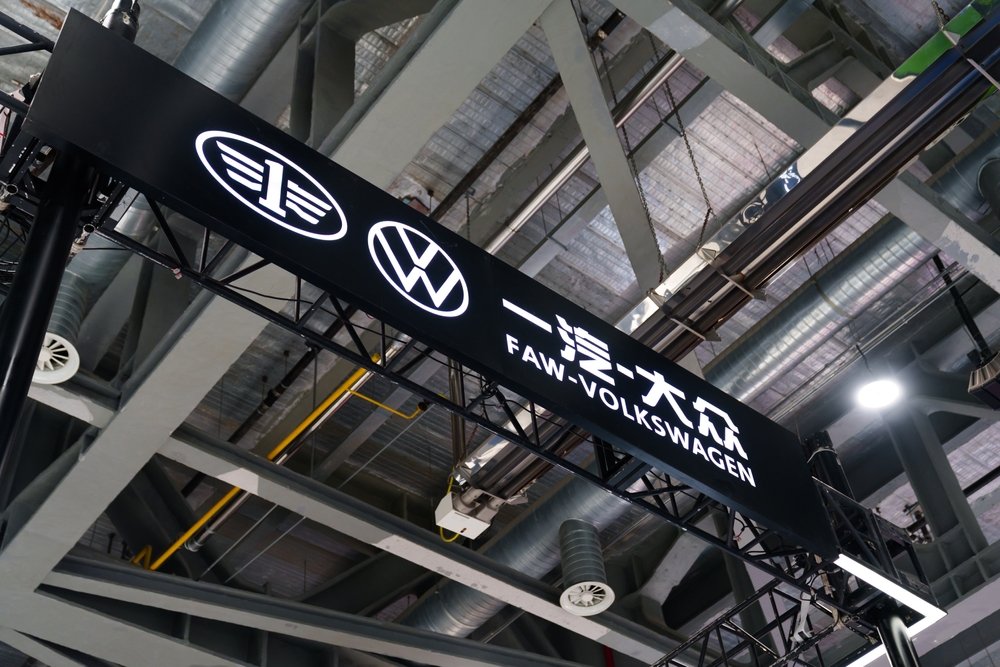
In the ever-accelerating global electric vehicle race, a new maxim is emerging for legacy automakers: to compete, one must become Chinese. Volkswagen’s latest strategic maneuver—developing and building EVs in China for the first time—is the most resounding affirmation of this trend yet. The German giant is not just outsourcing manufacturing; it is embedding itself in the world’s most dynamic EV ecosystem to slash costs, accelerate innovation, and ultimately, reshape its global competitiveness. 1
The New Global EV Strategy: Become Chinese
For decades, the global auto industry followed a script written in Detroit, Wolfsburg, and Toyota City. Now, the narrative is being dictated by the pace and innovation of China’s EV market. Volkswagen’s “In China for China” strategy, supercharged by its new Test Workshop in Hefei, is a tacit acknowledgment of this new reality. The Volkswagen Group China Technology Company (VCTC) is more than just an R&D center; it is a strategic immersion into the methodologies that have allowed Chinese automakers like BYD to dominate the market. 1
“The new workshops give our engineering teams an entirely new level of integration,” stated Thomas Ulbrich, CTO of Volkswagen Group China. “We can now run software, hardware, and full-vehicle validation processes in parallel, shorten decision loops, and bring innovations to maturity much faster.” 1
This approach—characterized by rapid iteration, deep vertical integration, and a relentless focus on cost—is the hallmark of the Chinese EV industry. By adopting it, Volkswagen is not just aiming to succeed in China, but to export this newfound agility to the world.
Adopting the Chinese Playbook
The benefits of Volkswagen’s strategic shift are a direct reflection of the Chinese EV playbook:
Tactic | Volkswagen’s Implementation | The “Chinese” Advantage |
Aggressive Cost Control | Up to 50% cost reduction | Leveraging local supply chains and hyper-efficient manufacturing processes. |
Rapid Development Cycles | 30% shorter development time | Moving from sequential to parallel engineering workflows, a common practice in China’s tech sector. |
Ecosystem Integration | Collaboration on ADAS, digital cockpits | Tapping into a mature ecosystem of tech suppliers and innovators. |
Software-Defined Vehicles | Launch of the China Electric Architecture (CEA) | Prioritizing software as the core of the vehicle, a strategy perfected by Chinese EV startups. |
A New World Order in Automotive
Volkswagen’s move is not an isolated event. It is part of a broader trend of Western automakers turning to China not just for manufacturing, but for strategic direction. The German automaker has already partnered with XPeng and Rivian, further demonstrating its willingness to embrace external innovation. 1
By building EVs in China for export to the Middle East and Southeast Asia, Volkswagen is signaling a new era. The goal is no longer just to sell cars in China, but to build cars like the Chinese—and then sell them to the world. This strategic pivot may be the only way for legacy automakers to survive and thrive in the new world order of the automotive industry.
References