The latest chapter in the protracted trade war initiated by the Trump administration reveals a narrative starkly different from the one promised to the American people. Rather than crippling the Chinese economy and forcing concessions, the tariffs have backfired, inflicting significant economic damage on the United States while highlighting China’s resilience and strategic acumen. Recent data on trade and economic growth, coupled with China’s dominance in critical supply chains, paint a clear picture: China is not only weathering the storm but is emerging in a stronger position, leaving the U.S. to grapple with the self-inflicted wounds of a failed policy.
China’s Export Engine Roars Ahead, Undeterred by Tariffs
Despite years of escalating tariffs, China’s export sector has demonstrated remarkable strength. In September 2025, exports surged by 8.3% year-over-year, accelerating from a 4.4% increase in August and defying economists’ expectations. This robust performance is not an anomaly but part of a consistent trend of growth, with year-to-date exports for the first three quarters of 2025 up by 6.1% to $2.78 trillion.
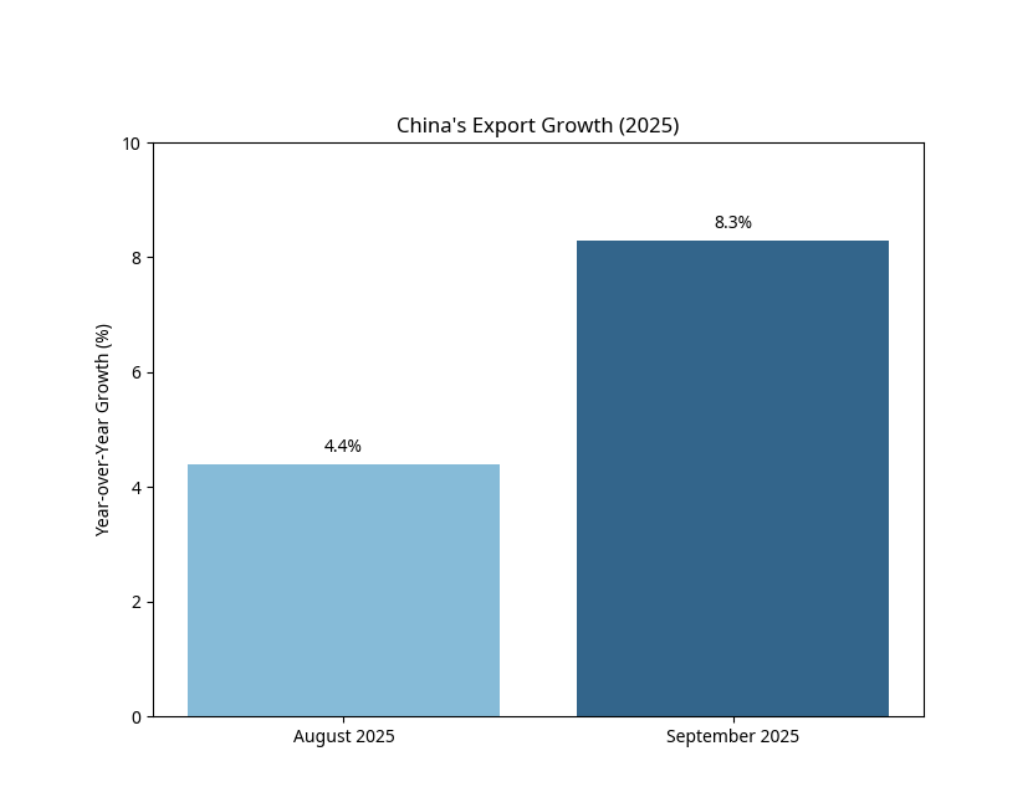
This resilience stands in sharp contrast to the intended effect of the tariffs, which were designed to stifle China’s economic growth. The data clearly shows that China’s export engine continues to hum, fueled by a strategic pivot that has rendered Trump’s primary economic weapon largely ineffective.
A Masterclass in Diversification: China’s New Trade Horizons
The key to China’s success lies in its deliberate and highly effective strategy of export market diversification. While exports to the United States have predictably fallen—down 27% in September—China has more than compensated by expanding its trade relationships with other regions. The results are striking:
•European Union: Exports grew by 14%
•Southeast Asia: Exports surged by 15.6%
•Africa: A massive 56.4% increase in exports
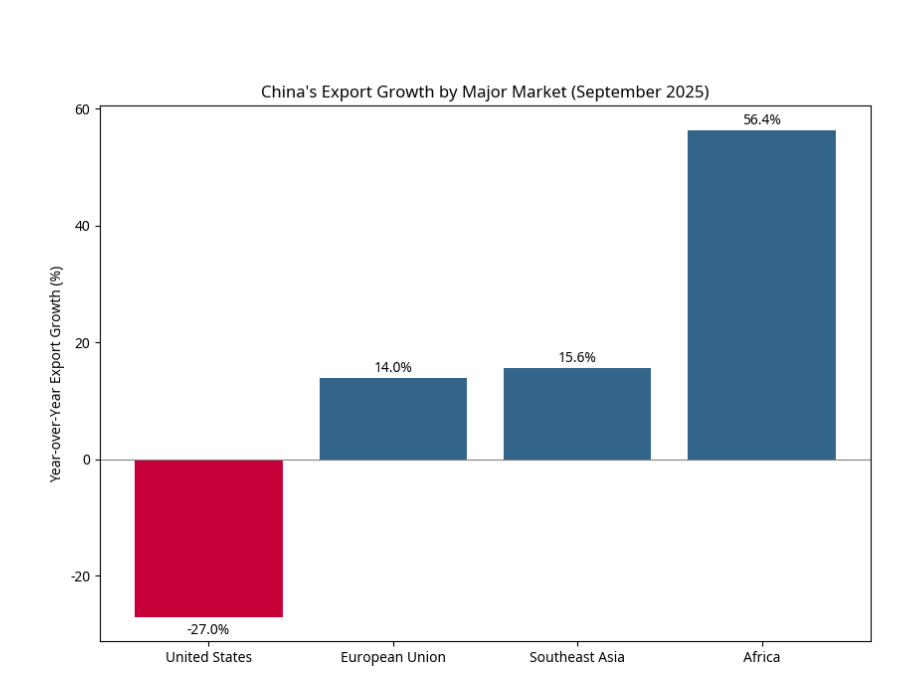
This strategic shift has reduced China’s reliance on the U.S. market, which now accounts for less than 10% of its direct exports. By cultivating new trade partnerships, China has not only insulated its economy from U.S. pressure but has also expanded its global economic footprint, a long-term strategic victory that will have implications for decades to come.
The Tariffs’ True Victim: The U.S. Economy
While China has demonstrated its ability to adapt and thrive, the U.S. economy is bearing the brunt of the trade war’s costs. The tariffs, framed as a tool to protect American interests, have instead functioned as a massive tax on U.S. consumers and businesses, leading to a cascade of negative economic consequences.
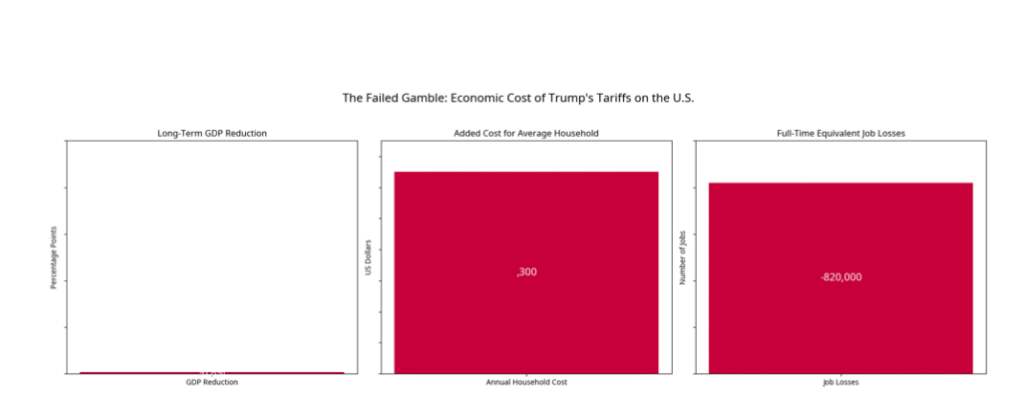
According to the Tax Foundation, the tariffs represent the largest tax hike in the U.S. since 1993, costing the average American household nearly $1,300 in 2025. The broader economic damage is even more alarming:
•GDP Reduction: A long-term reduction of 0.8% in U.S. GDP.
•Job Losses: The loss of 820,000 full-time equivalent jobs.
•Increased Costs: Imported goods have become 4% more expensive, and domestic product prices have risen by 2%.
These figures, corroborated by studies from institutions like the Wharton School and the Federal Reserve, reveal a policy that is actively harming the U.S. economy, with little to no tangible benefit.
China’s Strategic Leverage: The Rare Earths Advantage
Beyond its economic resilience, China holds a powerful strategic card: its near-monopoly on the global supply of rare earth minerals. These materials are indispensable for a vast array of modern technologies, from smartphones and electric vehicles to advanced defense systems. By imposing export controls on these critical minerals, China has demonstrated its ability to disrupt global supply chains and exert significant pressure on the U.S. and its allies.
This strategic leverage has not gone unnoticed. Wall Street investors and analysts increasingly believe that the U.S. will be “forced to make a deal” with China, recognizing the untenable position the U.S. has placed itself in. As one former White House advisor noted, “China has crafted a policy that gives it the power to forbid any country on Earth from participating in the modern economy.”
Conclusion: A Failed Gamble
The evidence is overwhelming. The trade war, far from achieving its stated goals, has become a costly failure for the United States. China’s economy has not buckled; instead, it has adapted, diversified, and emerged with a stronger global position. The tariffs have not brought back jobs; they have destroyed them. They have not protected American consumers; they have burdened them with higher costs.
The narrative of a triumphant America bringing China to heel has crumbled in the face of economic reality. The story of the trade war is one of Chinese resilience, strategic foresight, and a misguided American policy that has ultimately backfired, leaving the U.S. weaker and more isolated on the global stage.
References
1.Reuters: China’s exports top forecast but fresh US trade spat raises risks to outlook
2.Fortune: Stocks: Wall Street thinks China is winning Trump’s trade war
3.Bloomberg: Chinese Exports Soar, Giving Xi Stronger Hand in Trade Fight
4.Tax Foundation: Trump Tariffs: The Economic Impact of the Trump Trade War